Would the world be a
better place without religion?The well-known
atheist Sam Harris thinks so; in his book The
End of Faith he writes that religion is “the most prolific source of
violence in our history.”But is he
correct?
Whilst it is undeniable
that religion has and sadly continues to be used to justify terrible acts, it
is wrong to assert that religion has been the primary cause of war and
violence.
Philip and Axelrod’s Encyclopedia of Wars chronicles some
1,763 wars that have been waged in the course of human history. Of these wars, the authors categorise only
123 (or 6.98%) as being religious in nature.
It is non-religious motivations that bear the blame for
nearly all of humankind’s wars. Furthermore
religion has not played any motivating role in the major wars that have led to
the greatest loss of life. Lives lost
during religious conflict pale in comparison to those experienced during the
regimes who wanted nothing to do with the idea of God, such as Stalin, Hitler, Mao Zedong, Pol Pot, etc.
If
religion can’t be blamed for most wars and violence, then what is the primary
cause? The same thing that triggers all crime, cruelty, loss of life, and other
such things. Jesus provides the answer very clearly: “For it is from within, out of a person’s
heart, that evil thoughts come—sexual immorality, theft, murder,adultery,
greed,malice, deceit, lewdness, envy, slander, arrogance and folly.All these evils come from
inside and defile a person.” (Mark
7:21–23)
In
the end, the evidence shows that the #1 cause of wars and violence in the world
is not religion, but human pride and sin of which we are all guilty.
If
we are the problem we can also be the solution, as the Bible instructs ‘Turn from evil and do good;seek peace and pursue it.’
(Psalm 34:14) John F Kennedy said, “One person can
make a difference, and everyone should try.” Through small
acts of kindness and love, we can be the ones who help transform the world. Lord, make me an instrument of Your
peace. Where there is hatred, let me sow love; where there is injury, pardon; where there is doubt, faith; where there is despair, hope; where there is
darkness, light; where there is sadness, joy. O Divine Master, Grant that I may not so much seek to be consoled as to console; to be understood as to understand; to be loved as to love. For it is in giving that we receive; it is in pardoning that we are pardoned; and it is in dying that we are born to eternal life.
Walsall Advertiser Living Faith Article, published 29 March 2012
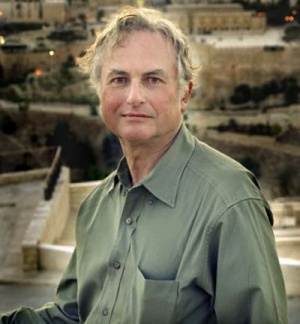
Richard Dawkins, author of ‘The God Delusion’, would like us to believe that religion is a spent force, and that the world would be a much better place without religion. Yet two events, one national and one local prove that he is wrong.
Two weeks ago Bolton Wanderers' midfielder Fabrice Muamba collapsed during his teams FA Cup tie against Tottenham, he was rushed into hospital fighting for his life. What has been so extraordinary about this story is that so many people, many of whom I suspect would not necessarily profess to having an active faith, have been praying for Fabrice. His former team mate, Chelsea defender Gary Cahill wore a vest encouraging supporters to "Pray 4 Muamba" and the Sun newspaper rang the headline "God is in Control" below the subheading "Praying for Muamba", and the Daily Star had "In God's Hands".What this goes to show, is that the vast majority of people, whether they have a strong faith or not, in times of difficulty turn to God in prayer.
Closer to home, Monday 26th March marked the first anniversary of the launch of Street Pastors in Walsall. During the last year hundreds of people have been helped by the Street Pastors, Christians from churches across Walsall, who give up their time to patrol the town centre every Friday and Saturday evening from 10pm to 4am. Whether it is providing a listening ear, sweeping up broken glass, or helping someone who has had too much to drink, the presence of the Street Pastors in Walsall has helped to make the town a safer place. This has been recognised by two community service awards that the Street Pastors have received in the last month, one from Walsall Housing Group and the other from the West Midlands Police Authority.
What these two stories go to show is that religion, far from being a spent force, is alive and well in our society, and that faith rather than being a bad thing, is a positive thing that should be nurtured and valued. As we approach the great festival of Easter, when Christians celebrate the resurrection of Jesus from the dead, it is a good reminder of the central role Christianity has played and continues to play in shaping the values of our society, and that we should not be ashamed of our Christian heritage, but value and protect it.
In mid September Christine and I were away and so missed the Pope’s visit to the UK. However, thanks to Sky and the BBC we were able to view some of the highlights.
What amazed me was the amount of time given to the Humanist society to create a “balanced” view. One of their speakers obviously could not cope with the numbers of people who turned out to see the Pope and stated that they were not Christians but tourists who just so happened to be visiting the various cities. I wish he could explain how he knew with such certainty.
Why is it that some people are so quick to denounce those who show themselves to be Christian? Why are some people quick to complain about Christians coming together? Do they find it strange that people have faith in God and His Son Jesus Christ?
I can’t answer these questions but I feel saddened when some people decry the faith held by others. I remember a simple saying - “I don’t agree with what you say but I will defend your right to say it.” Nowadays we seem to have many people who do not wish to extend that right to others. They have a right to say what they like but they do not wish us to profess our faith.
Everyone has a complex set of faiths, they have faith in themselves, in their Doctor and some even have faith in politicians but these are lesser faiths when compared to Biblical faith. This is faith in a person not of this world who has powers infinitely greater than any human.
The Bible, as always, addresses the question of faith - Hebrews (Chapter 11). “Now faith is being sure of what we hope for and certain of what we do not see..........,By faith we understand that the universe was formed at God’s command, so that what we see was not made out of what was visible.......................”
If you ever feel your faith faltering read Chapter 11 and remind yourself of the Biblical characters who showed great faith. Then take time to reflect on all of the blessings brought upon us by our God and rejoice in our faith.
In 1989 Mother Teresa gave an interview for Time Magazine. When asked what motives her work, she replied "We try to pray through our work by doing it with Jesus, for Jesus, to Jesus. That helps us to put our whole heart and soul into doing it. The dying, the cripple, the mental, the unwanted, the unloved they are Jesus in disguise."
She was also asked what is God's greatest gift to her, to which her response was: 'The poor people.' Because with them "I have an opportunity to be with Jesus 24 hours a day."
These are extraordinary words from an extraordinary person, who devoted their life to serving some of the neediest people in the world. In her service to the poor we are reminded of Jesus' words from our reading this morning 'I tell you the truth, whatever you did for one of the least of these brothers of mine, you did for me.' (Mt 25:40)
I was reminded of these words recently when Beata and I were in Poland over the summer. We were sitting in the centre of Torun, enjoying a pizza on one of the many street cafes when I spotted an unshaven, dishevelled man limping badly and walking with the aid of a stick. He had the appearance of someone who had been drinking, although to be honest I couldn't be sure. When I saw him I confess that I averted my gaze, hoping that he would pass me by. But instead he came towards us, and so I prepared to send him on his way by saying to him in English that I couldn't speak Polish, because I expected him to ask for money, and I've always been reluctant to give money to people on the streets. But to my surprise he asked in broken English "Can I please have some of your pizza."
I confess that I felt an immediate pang of guilt, and so we handed one slice of pizza to the man, which he took gratefully and ate as he walked away from us down the street.
It was only after he was gone that I suddenly thought to myself, we've just been visited by Jesus, in the form of this broken man, and I was overcome with a tremendous sense of guilt. I didn't need that pizza, I had eaten well today, and knew that tomorrow I would eat well again, his need was much greater than mine, and yet all I was prepared to give was one slice of pizza, making sure there was plenty left for me. And I realised that could have, and should have done so much more. I could have sat him down and offered to buy him a proper meal, to forget about my embarrassment and worry, and treat him like a human being, giving him one of the most precious gifts, the gift of time. But instead I had been more concerned that he should move on, and go somewhere else, so I could enjoy my food in peace.
"For whatever you do to the least of these dear brothers of mine, you do to me."
It's a challenge to see Christ in other people, but that is what we are called to do. Think about the people you will meet today, the people in the shop, your neighbours, the people you know, and the people you don't know. Each of them is Christ in disguise.
In the interview with Time Magazine the last question Mother Teresa was asked was what are your plans for the future?
Her reply was, "I just take one day at a time. Yesterday is gone. Tomorrow has not come. We have only today to love Jesus."
We could do well to follow her example, for we only have today to love Jesus.
There has been a saying which has always baffled me, and that is "Sticks and stones may break my bones but words can never hurt me."
I have always wondered who thought up this saying – because it is clearly wrong!! The truth is that words are tremendously powerful. The words we speak can do both a lot of good, but they can also do tremendous harm. Proverbs 18:21 says "The tongue has the power of life and death."
Apparently on average we speak between 16 thousand to 20 thousand words a day. So there are lots of opportunities for us to make an impact by the things we say, either for good or ill.
Carefully chosen, thoughtful words, spoken in love can build people up, encourage, inspire and motivate. But carelessly spoken, thoughtless words can kill enthusiasm, knock self esteem, lower expectations and hold people back. As this video illustrates.
There may be people here today who are living with the consequences of things said to them in the past. Imagine for example if as a child you were constantly tolled that you were no good, or you would never amount to anything in life, or that you were ugly, or fat, or not good enough, that can have a lasting impact on you. My own mother, for many years struggled with low self esteem, because as a child it was made clear to her by her mother that she preferred boys rather than girls. Words are extremely powerful, and as Christians we need to be aware of the impact of the words that we speak.
This is why the apostle James wrote "the tongue is a small part of the body, but it makes great boasts. Consider what a great forest is set on fire by a small spark. The tongue also is a fire, a world of evil among the parts of the body." (James 3:5-6) That's strong stuff, but it is true! A harsh critical word, the spreading of gossip, a word spoken in anger, can quickly spread out of control, and cause lasting damage.
THE POWER OF GOSSIP
The trouble is it is very easy to get drawn into gossip.
Four preachers met for a friendly gathering. During the conversation one preacher said, "Our people come to us and pour out their hearts, confess certain sins and needs. Let's do the same. Confession is good for the soul." In due time all agreed. One confessed he liked to go to movies and would sneak off when away from his church. The second confessed to liking to smoke cigars and the third one confessed to liking to play cards. When it came to the fourth one, he wouldn't confess. The others pressed him saying, "Come now, we confessed ours. What is your secret or vice?" Finally he answered, "It is gossiping and I can hardly wait to get out of here."
Gossip is a problem we all have to face. A whole industry is based around it. Think about all the column inches in tabloid newspapers and magazines are devoted to gossip about people in the public eye. The truth of the matter is that most people love gossip, and Christians are as guilty as anyone else.
THE BIBLE AND GOSSIP
So what does the Bible have to say about the issue of gossip?
The Bible is clear – gossip is damaging, and harmful and as Christians we should have nothing to do with it. For example, the book of Proverbs says "A gossip betrays a confidence, but a trustworthy man keeps a secret." (Prov 11:13) and "A perverse man stirs up dissension, and a gossip separates close friends." (Prov 16:28)
If you have ever played the game Chinese whispers, you know how quickly things become distorted, which is what happens in gossip.
It is quite easy for us to fall into the trap of gossiping, even when we don't intend to, and for Christians this is particularly relevant when it comes to prayer. I have experienced situations where Christians have in effect used prayer as the excuse to gossip about someone. Our excuse is that we are asking people to pray for a specific person or situation, when it actual fact what we are doing is really gossiping.
If someone shares with you some important piece of personal information, it does not give you the right to go and share that with others unless you have the clear permission to do so from the person in question.
Paul gives us some clear guidance in Ephesians 4:29, about how we should control our tongues. Do not let any unwholesome talk come out of your mouths, but only what is helpful for building others up according to their needs, that it may benefit those who listen.
The guidance is clear, we are not to say or do anything which could hurt others, but instead build people up. There is a saying, 'Think before your speak', and it's good advice for us to follow. Before we speak about any person or subject that could be controversial we need to ask the following questions:
T--Is it true? - if the answer is no, then it shouldn't be repeated
H--Is it helpful? Even if it is the truth, do you really need to share it?
Will it help anyone? Will it hurt anyone? Would it be better left unsaid? If there are no benefits to anyone, then what possible purpose could repeating it serve?
I--Is it inspiring?
N--Is it necessary?
K--Is it kind? Our world is full of cynicism and scepticism, will
repeating this story be kind? Can it be better left unsaid?
Would you really be better off repeating this information?
If what I am about to say does not pass those tests, then it is better to keep my mouth shut.
The words that come out of mouths reveal what's on our hearts
The words that come out of our lips, points to something deeper that's going on in our lives. That is why in Jesus in Matthew's Gospel says, "the things that come out of the mouth come from the heart." (Mt. 15:18). It follows that if we choose to put good things into our hearts, good things come out of the mouth.
As Christians we are called to tame the tongue, to think carefully about the words we speak. In Psalm 141 David prays, "Set a guard over my mouth. Keep watch over the door of my lips. Let not my heart be drawn to what is evil." To pray that prayer, means to recognise the power of our words, and to ask God to help us control what we say.
THE WAY OF LOVE
As Christians the main commandment we are given is to love. "A new commandment I give to you, that you love one another, even as I have loved you, that you also love one another." (John 13:34)
The word that Jesus uses to describe love is agape, it is a uniquely NT term, for agape means a love that gives itself for the good of the recipient. And that is why this command to love is so important.
And so as we speak to others, we need to assess our words in the light of this command to love. Do our words promote and encourage love? Do they strengthen and build others up? Do we speak to people in the way we would want people to speak to us? This becomes a particular challenge, when others may be attacking us, when we are being falsely accused. But even in those moments when we may have to confront others, we need always to speak out of love just as Jesus did.
There seems to be so much cynicism and negativity around our society at the moment. But as Christians we can do something about that by speaking words of life and encouragement. Think how you feel if someone says some affirming encouraging words to you, it makes a difference.
Story of Johnny – Johnny who has Downs Syndrome, and works in his local supermarket packing bags, decided one day to try and do something positive to serve the people who come into the shop.
He decided to give every customer whose bag he packed a thought for the day on a piece of paper. Within a few weeks the number of people waiting in the line for Johnny to bag their groceries was 3 times as long as the other lines. When the store manager tried to get people to use the other lines, those in line would simply say they were willing to wait for Johnny.
Because of Johnny's simple act, it transformed the whole atmosphere and culture of that store, as a spirit of service spread across the shop. Johnny's idea wasn't as innovative, as it was loving. It came from his heart
It was a simple thing that Johnny did, but it was something that had a huge impact.
Words are tremendously powerful, they can either bring life and death. God gives us the freedom to choose how we use words and how we receive them. My prayer is that we will all strive to be encouragers and use our words to bless and help others.
When we think of Christian ministry, we tend to think of it in terms of the activities we do in 'church'. For instance being a home group leader, running children's groups, cleaning the church building, or being a warden. And there is nothing wrong with this, these are forms of Christian service. But how many of us think of what we do Monday to Friday at work as part of our Christian service and ministry?
Mark Greene has written extensively of ministry in the work place, and in his book 'Thank God it's Monday' he quotes one person who said the following: "I've been working for seventeen years and it's only in the last year or so that I've recognized my workplace as a ministry. How many Christians die without ever realizing the ministry God had for them?"
So this morning I want us to think about ministry in the work place, the challenges and the opportunities that as Christians we face. What I want to say this morning, isn't just restricted to those who are in paid employment, it relates to all of us.
Why Work is Important
We only have to look at the opening chapters of the Bible to see how important work is in God's scheme of things.
First of all we see that God is a God who works. The Bible describes creation as the work of God. For six days God works, and on the seventh he rests from all the work he has done. God is a worker and it is something he chooses to do- it is part of his plan. And we see that God takes pleasure in his work. We're told that when God finished creating the heavens and the earth he said that it was 'very good'.
Work was part of God's gift to humanity in creation; it was part of his original plan. God has created us for work, and this work is given to us as a blessing. We see this in Genesis 1:28, God blessed them and said to them. 'Be fruitful and increase in number; fill the earth and subdue it. Rule over the fish of the sea and the birds of the air and over every living creature that moves on the ground." And from Genesis 2:15 we read: "The LORD God took the man and put him in the Garden of Eden to work it and take care of it."
There is a moral responsibility which is connected to the work we do. For example the Bible talks about the importance of working in order to support those in need, working in order to improve the life of the community as a whole.
God always intended us to be people who work, and God intended work to be a source of satisfaction and pleasure.
And in the New Testament Paul calls upon Christians to do their work for God. Paul writes to the Colossians 3:17, "whatever you do, whether in word or deed, do it all in the name of the Lord Jesus, giving thanks to God the Father through him." Work is one of the ways in which we serve God.
Why the workplace is so important?
In 1945 the Church of England produced a book called 'Towards the Conversion of England'. In it are written these words. "We are convinced that England will never be converted until the laity use the opportunities daily afforded by their various professions, crafts and occupations."
As Christians God has called all of us to be his witnesses in the world. The greatest mission field in the world today is right on our doorstep amongst our friend's neighbours and work colleagues. Britain today is a largely post-Christian society. Fewer and fewer people are attending churches; the level of Christian knowledge in our society is at an all time low.
And this is why being an effective witness in the workplaces so important. Because it is the place where we spend much of our time, maybe up to 40 or 50 hours a week. In the workplace Christians and non-Christians are able to meet and are subject to the same work cultures, and the same pressures. The work place is one of the few places where a non-Christian can actually see the difference that knowing Christ can make to a life, week in, week out. And through the workplace we will know many people, and have many friends, and we will be in contact with people at important points in their lives. For instance when people are facing divorce, illness, or bereavement.
So we see the wonderful opportunities that we have as Christians to minister to those we work with. As Emil Brunner said, what the Christian community needs to do is to regain the lost sense of work as a divine calling.
The challenges of the workplace
We only need to consider the issues facing workers today, to realize what opportunities we have as Christians to bring something positive into the work place.
British workers work longer hours than any other nation in the European Union. And increasingly people are suffering from increased levels of stress, anxiety, bullying, depression and less job satisfaction. And people are being forced to work these longer hours, because they fear that if they don't, their employers will find someone who will. For most people, job security is a thing of the past.
Also consider the values that shape the work place, and the desperate need for a positive Christian witness. For example, most contemporary workplaces will operate on secular values, and would see themselves not accountable to anyone else their employers or share holders.
The challenge for us as Christians is how to remind people that we are accountable to God for our actions. What assumptions and attitudes exist in your workplace, and how to they compare to the values and attitudes that God has, such as truth, honesty, justice, and fairness? And what are the values that we bring to the work place? Do we allow our Christian faith to have an impact upon what we do at work?
A further challenge is that increasingly people are seen in terms of what functions they perform in the business, rather than being treated as human beings. And as we work longer hours, people tend to see their work as a measure of their identity and worth. Yet the Bible reminds us that we are created in God's image, and this attaches a special worth and dignity to each individual person, irrespective of what we do. How can we ensure that this message is heard in the workplace?
So we can see both the challenges, but also the opportunities that we have as Christians in the world of work. So for the remainder of this talk I want us to consider how we can develop a Christian vision for the work place.
A Christian Vision for the Work Place
Our work matters to God
The first thing we need to be reminded of is that our work matters to God. God is deeply concerned about the work we do, he is concerned about every part of our lives, and not just what we get up to on a Sunday morning. The work that I do as a Vicar in God's eyes is no greater or more important than the work you are involved in. We tend to talk about the priesthood as a vocation, a calling, but secular employment can be just as much a vocation. Think about how important it is for us to have Christian teachers, doctors, nurses, accountants, etc. In fact we need Christians in every walk of life.
If we look at the Bible we see that many of the great biblical heroes were people who had what we would term secular jobs. For example, Joseph who became the chancellor in Egypt, Daniel the imperial adviser to Nebuchadnezzar, or Nehemiah who was the cupbearer to king Artaxerxes.
Our primary calling is to be a servant of Jesus Christ
Secondly we need to remember that our primary calling is to be servants of Jesus Christ. A man standing on the platform waiting for the train to take him to work was asked, Who are you? He replied… I am a Christian thinly disguised as an accountant.
If we begin to see our workplace as the context for mission and evangelism, it will change our whole attitude to those we work amongst. For example do we pray for those people we work for? When you go into work do you ask God for opportunities to share your faith with those you work with? And do you meet up with other Christians who work at the same business as you to pray and study the Bible & support one another? Jesus said, Open your eyes and look at the fields! They are ripe for harvest. The harvest is ripe, we should ask God to use us to share his love. The important point is that it is not about getting people into church, it is about telling them about the love God has for them.
Being an effective witness in the workplace doesn't require a degree in theology, just openness to God as the following example demonstrates.
Emily, a small Chinese lady, works at the United Nations. One day one of her co-workers wasn't feeling well. 'Can I get you a cup of tea?' Emily enquired.
'No' the other replied rather shortly. 'I don't like the tea here. I only drink camomile.' Emily left her, quietly slipped on her coat, took the lift down several floors and went down the street to a nearby shop. She returned with a box of camomile tea and gave it to this lady, who immediately enveloped her in a huge hug, exclaiming, 'Emily, I love you'. Emily replied, rather muffled from the epicentre of the massive hug, 'I love you too.'
Emily's story illustrates a number of important points:
We need to be ministry minded- Emily could have just smiled and gone on her way. Instead, because she was ministry minded, because she listened, because she saw the other person's need and desire, she took an initiative that totally transformed that person's mood and day.
Time is on our side- the opportunities will come. We don't have to create situations in which we can minister- they will happen by themselves. We simply need to pray and be alert.
Ministry is to individual people- Clearly camomile tea wouldn't have been a good idea for everybody, but it helped this one woman. We need to care for people and love them as individuals.
Ministry doesn't demand- it gives- Emily asked for nothing, not even the money for the tea. She gave expecting nothing in return. Our expressions of love for others shouldn't have any strings attached. We need to be sensitive and distinguish between the opportunities to serve and the opportunities to communicate the gospel verbally.
I've recently read the book 'The Practice of the Presence of God' written by Brother Lawrence who in the 17th century lived in a Carmelite monastery in Paris.
Brother Lawrence worked in the monastery kitchens, a job which incidentally he didn't particularly enjoy. But despite this he believed that all work, no matter how mundane or routine it may be, could be a medium of God's love.
He wrote the following: "We can do little things for God; I turn the cake that is frying on the pan for love of him, and that done, if there is nothing else to call me, I prostrate myself in worship before him, who has given me grace to work; afterwards I rise happier than a king. It is enough for me to pick up but a straw from the ground for the love of God."
His attitude to work is one that we could do well to follow, so that everything we do is given to God as an offering, and an opportunity to be his witness. Amen.
Gordon Brown described it as "probably the worst-kept secret of recent years", he was talking of course about the announcement that the General Election will take place on Thursday May 6th.
If you were hoping for church to be a politics free zone, then for this Sunday at least, I am sorry to disappoint you.
This general election is one of the most important elections for many years, and it takes place at a very difficult period in our nation’s history.It is hard to think of a time when the standing of politicians has been at a lower ebb, especially after the expenses scandals.For the first time, politicians have dropped below journalists in terms of levels of public trust.73% of the public think that politicians will not tell the truth, as opposed to 70% of journalists!
In addition Britain is only now slowly emerging from one of the worst recessions in living memory, and the country is facing unprecedented levels of national debt of £848.5 billion (that is 60% of National Gross Domestic Product), or to put it another way £24,508.12 per person in the UK.
Listening to the debates on radio and TV, and talking to people, it is clear that many people are uncertain about who to vote for in this forth coming election – myself included.We face the real possibility that we may end up with a hung parliament, which means our votes are more important than ever.And so today, I want to think about some of the issues we should consider when thinking about who to vote for in these elections which are due to take place in just over two weeks time.
But before I do that, I want to address a question that is often raised, is it right for politics and religion to mix?There may even be some people here today, who might feel that what I am discussing today is an inappropriate subject for church.So should politics and religion mix?Well the simple answer is yes!The Bible is clear that as Christians we have a strong social role to play in the world, and therefore we must be interested in politics.The Gospel and politics are inseparable. Jesus had a clear agenda in his first recorded sermon, in which he defined his mission as: preaching good news to the poor, proclaiming freedom for the prisoners, recovery of sight for the blind, and release for the oppressed (Luke 4:18) – it is hard to think of a more political agenda than that.And ultimately Jesus went to the cross on a political charge.Politics is about everyday life and that is exactly the domain that the Gospel moves in.Archbishop Desmond Tutu said, “I am puzzled about which Bible people are reading when they say religion and politics don’t mix.”If we as Christians want to be involved in the mission of Jesus in the world, then we will necessarily stray into the world of politics – it is unavoidable.So much of our everyday life and experience is massively impacted by politics.The fact that it affects us is why we can’t avoid it.But the fact that it affects others means we have a duty not to ignore it.This is why Bishops in Wales issued the following statement: “For Christians, voting at the time of elections is not only a privilege but a duty and we write to urge you to take this responsibility seriously.”
But what about elections, how should we vote and for whom?Well first of all, don’t worry I am not going to tell you who to vote for – that is something you must decide for yourself, but there are some issues that as Christians I believe it is important we consider when it comes to deciding who we want to vote for in the elections.This inevitably means we are going to have to do some homework.
In a general election there is always a question about whether we are voting for the candidate who we feel would make the best constituency MP, or the party that they represent.For those of us who live in the Walsall South Constituency, this is a particularly relevant question, as Bruce George, who has represented Walsall South since 1974, has just retired and in a few weeks time we will be getting a new MP. At a general election I think it is important that we look not just at what a candidate would be like on local issues, but consider the wider issues as well.For example many people there is a temptation to vote for the party that will best serve their own interests, but as Christians we need to focus on gospel values and consider the common good.How will the policies of the different parties meet the needs of the world and bring about a more just society?
This is just one of a number of important questions we need to consider, for example how would the different policies of the parties affect the weak and vulnerable in our society?What sort of society do they want to build, and how do those aims tie in with God’s aims.We need to consider what their views are on key issues such as the economy.How do they plan to deal with our current economic crisis?With public expenditure inevitably set to be reduced painfully in the next few years, how will it impact the most vulnerable people in our society?Other issues include child poverty, family life, marriage, the sanctity of life, freedom of speech and freedom of faith.
The overriding principle is that we place our cross on the voting paper in the same Spirit that Jesus carried and placed his cross deep in the earth, listening to his Father, in prayer, selflessly for those who were poor, and commending himself and those around to God.
This means that certain parties or individuals cannot be voted for. Parties who adopt policies that are racist – for example the BNP, that divide people against each other, and do not take into account the poorest in society cannot and should not be supported by Christians.
All of us are called as Christians to join in the debates taking place now on the nature of our society and what really matters.I hope that you will take the opportunity to attend the hustings that are being arranged, to meet and hear the candidates standing for election.In the Walsall South constituency the hustings are taking place on the Friday 23rd April at 7pm in Palfrey Community Centre and Wednesday 28th April at 8pm at St Mary’s The Mount on Glebe Street.
Finally we need to pray for all those who will be elected to represent us in Parliament.Paul writes “I urge, then, first of all, that requests, prayers, intercession and thanksgiving be made for everyone— for kings and all those in authority, that we may live peaceful and quiet lives in all godliness and holiness. This is good, and pleases God our Saviour.” (1 Tim 2:1-3).Whether the party you vote for wins the election or not, we need to pray for all those in positions of leadership and authority, especially our Government as we face some very tough times ahead.We need to pray that God will give them wisdom and grace in all the decisions they make, and that through the decisions they make, it will help build a better society and better world for all God’s people.
Let us pray:
Lord of all,
rich and poor, young and old, the helpless and the helper,
we pray for those who are standing for election
and for all who will be voting in these challenging times.
Give them wisdom, insight and moral courage to act as you desire.
Guide their decisions, Lord, whether or not they acknowledge your guiding hand upon them.
As we receive news of policies made, actions taken,
may your eyes be ours as we read the press,
may your ears be ours as we hear the news,
may your reactions be ours as we process our thoughts.
Thank you Lord that we do have a role in decision making, when we bring our intercessions to you, whose government is perfect and without end.
Continuing our series of Questions of Faith which look atwider issues and their relevance to our Christian lives today, id like us to consider Ecology , in particularly the threat to the earth’s bio diversity and its effects, its challenges, and our Christian responsibilities and possible responses in our lives in the 21stcentury.
This is once again a huge area and topic , upon which I can only illustrate a fraction of the issues and challenges it poses to us as Christians; as sisters and brothers, and as citizens in God’s world in the 21st century.
It is a huge and challenging subject for me to preach on and for you to absorb and pray about, but i feel we must, both individually and as a gathered church, for as we heard in Marks Gospel, the truth needs good hearts to grow in.
First some broader issues…which I hope will highlight some of the issues, and the joined up nature of the ecology and bio diversity we are all part of in God’s world:
The Turkana pastoralists and ecological biodiversity
Biodiversity
Since 1999, there’s been virtually no rainfall in north-west Kenya.
The Turkana people who lived there survived as nomads, herding their cattle from place to place, wherever there was grass.
When there was rain, they and their cattle could build up their strength until the next drought. But since climates around the world started to change, the drought in the Turkana region has been continuous.
There was fighting over the few remaining water holes; some families moved away; others were too attached to their nomadic life to change, and their situation is dire.
Aid workers have realized, as never before, how interdependent are the worlds of plants, animals and human beings.
In this country of ours, the ecology balance has changed out of all recognition since my childhood, the idea of seasonal food , like a season for fruit, or some vegetables or old and new potatoes, green beans, etc. summer fruits, and indeed the concept of their being only one time in a year for strawberries or raspberries, is just a fading folk memory.
We have beans flown in from Kenya, tomatoes from Spain, pineapples from south America, fruit from south Africa, and all the rest-in fact anything you could ever want, all year round, winter or summer on demand, we Live eat and shop in global supermarkets, with global products, in a way unthinkable 50 years ago, and it’s all based on burning fossil fuels to transport and supply these western luxuries on demand, that are taken for granted as what we need.
In Genesis Chapter 9 we hear ‘God blessed Noah and his sons, and said to them ‘’be fruitful and multiply, and fill the earth’’.
And of course we have, on all 5 continents, as descendents ofthe sons of Noah, Sham, Ham and Japeth.
Modern genetics may explain it differently but, the different races in the world are related to each other.
Even in the Bible it was recognized that we’re all descended from common ancestors. So the races are dependent on each other. You can’t say that drought’s a problem for the Africans, and nothing to do with us. The Africans and the Europeans are cousins; we should think of each other as brothers and sisters. Most people today accept that drought in Africa’s caused by global warming, which is the result of carbon emissions in the industrialized nations.
Many believe that human fueled global warming is also affecting sea levels world wide. So what you may say; if the sea level goes up a few feet, that won’t cause much harm surely?
Bangladesh has a population of over 162 million souls, predications are that in the next 10 years there will be over10 million climate refugees from Bangladesh alone, looking for new countries to live in.
If the sea level rises by 3ft, half the present country will be under the sea.
The ecological consequences are joined up globally and have very serious repercussions, in Bangladesh, in the Maldives, in Holland, in the arctic, Antarctic, and others , and with refugee flows in the future.
The Second thing we learn from the story of Noah is that human beings depend on the well-being of the plants and animals for their food supply.
So Whether or not you’re a vegetarian, you have to recognize that the healthiness or otherwise of the world of nature affects our own survival.
The demands of biodiversity and the protection of endangered species are not just the concern of a few cranks; they all affect the food chain somewhere, and the extinction of species may rob us of so far undiscovered medicines.
Genetic engineering may be good if it increases food supplies to poor nations, but if poor people can’t afford to grow the new strains, then once again the rich will become richer at the expense of the poor.
The developed nations produce something like twice as much food as we can eat, but instead of sharing the rest with the poor, we throw it away and further pollute the environment with landfill sites.
But we are so advanced, we humans, we couldn’t do that, or be that short sighted, could we?
Lets look at something’s that have happened in the past, are occurring now, and may happen in the future if our stewardship and care of Gods earth and its complex ecology isn’t up to what’s required from us.
Lets look into the past, the extinction of the dodo, great auk, the near extinction of the great whales and many, many more, were all human driven; but lets look at another example of mankind’s often short sighted approaches…
The passenger pigeon.
Remember earlier that I said the estimated population of the earth for humans is 6.83 billion?
Well in about 1850 there may have been more than 7 billion passenger pigeons in north America alone!
They used to migrate yearly, the flocks often described as up to 10 miles wide and 50 miles long, and could take from 7.30 in the morning till 4 in the afternoon to pass one spot.
The flocks so tightly packed that a single shot could bring down 30 birds, numbers unimaginably huge.
Surely an indestructible species?
Yet within 50 years the species was extinct.
How?
Their woodland habitat was cleared; they were blasted from the skies to cheaply feed people, a brace of passenger pigeons ready to eat cost 1 cent in New York, at a time when there were over 5 dollars to the pound!
Their eggs were taken, their young taken, and even when it was clear the passenger pigeon was clearly in trouble, still the slaughter went on, breeding collapsed as they only laid one egg every other year, in fifty years 7 billion vanished to none in 50 years.
But you say that was then not now, true but many of the worlds fish stocks have been overfished some to the brink of extinction….make you think doesn’t it?
Mono culture where we only plant one of two varieties, leaves us venerable as well….if both strains are susceptible to a disease, as in the only two types of potato planted in Ireland in the 1846,the potato blight devastated both types, which lead to the potato famine in Ireland, the death of 1 million people, and another 1 million moving to the New World to escape.
Even today in the 21st century about 80% of our food comes from just 20 kinds of plants, we are not totally immune in the modern age either!
We don’t know in this modern scientific wonder age just how many species if you include insects and invertebrates, there are in this world.
Estimates range from 10 million to 100 million, and of those, mankind has only named 1.4 million. We just don’t know what health benefits, cures, and other issues for mankind die with each species lost.
Aspirin as it is now called is the active ingredient from willow bark, it use dates date back to at least to 3000 BC, and is still in wide spread use today. There are man more.
Some 50% of pharmaceutical products in use today come or derive from plants, animals and micro-organisms.
One study said with the loss of species, habitats and ecological bio diversity, some 30% of all natural species will become extinct in the next 50 years, through habitat destruction, overkill, and over harvesting.
So you might say, does it really matter after all it won’t affect us surely?
We are so technically advanced that such a wise race couldn’t have any problems in the 21st century, were immune from all that.
That all happens in other parts of the world, it won’t affect us…
Ok let’s hope so…but
Let’s take the humble bee for instance, we wouldn’t miss it surely? Except perhaps for the honey ?
Well They are disappearing , some areas are 70% down in numbers recently.
But bees do much more than just make honey. They fly around pollinating all sorts of fruit and vegetables, which end up on our plates.
Their role in the food chain is so important that in 2007 The National Audit Office collated the value of honeybees to the UK economy.
The value of the bees' services were estimated at £200m a year. The retail value of what they pollinate was valued closer to £1bn- 3 years ago.
Nobody knows exactly what impact the current decline in honey bee populations is having on these figures and on the supplies of these foods, but it is clear there could be consequences.
"If we had a serious loss of honeybees in the UK, then inevitably food prices would have to increase," according to Simon Potts, head of pollination research at Reading University.
"Essentially we would have to import fruits from overseas. The problem is bee numbers are declining world wide.
"Either that or the British diet would have to change considerably. Instead of eating fruits we'd have to switch to more starchy foods like grains and cereals."
Costs would more than double of what was still available then.
It has also been calculated that’s much as 25% of what we eat depends on the humble bee.
A quote attributed to Albert Einstein predicted, if the bee disappeared off the surface of the globe, then mankind would have only four years of life left.
No more bees, no more pollination, no more plants, then no more animals, then no more man.
Whilst that may overstate the issue, but it would make a good if slow moving disaster movie, it is serious concern however.
Why are Bees Disappearing?
The answer to this question remains elusive, but researchers are working to find a cause. .Some of the theories for bees disappearing are mites, use of pesticides, viruses, fungi, poor bee nutrition, radiation from mobile phones interfering with their navigation systems, solar flare activity and the geomagnetic orientation of the earth. No specific theory has identified the cause to date. We simply don’t know. Perhaps some prayer for the bees might be one response in Gods world.
The Bible and ecology
So the Bible teaches that ecology’s the concern of us all.
Ecology however asks us huge questions, and of cause with all these complex issues, there are no simple answers I’m afraid.
Our little gestures like switching to low-energy light bulbs and inflating our car tyres correctly, to save on fuel, and planting a few bee friendly plants in our gardens; or buying Free trade or Organic products if we can afford them; or only put as much water in the kettle as we need, instead of filling it up every time we boil it; or only using the central heating when we need it, or turning the thermostat a few degrees; or recycling and minimizing waste and or thinking when we source our shopping bearing also in mind the peoples livelihoods that produce our food from all over the world; and of course only using our cars when we need them, and not for everything!
Some might say it may not make much difference, but at least they show that we’re concerned, and others can help us put it all into perspective and face up to the major challenges that surely will come in time.
We like to think we are in total control of our world, but a minor volcano and some ash perhaps showed us otherwise recently!
What God expects
So God expects you and me to be concerned about these problems, and to do something about them.
Like loving your neighbour like yourself, can only work properly if you love yourself, perhaps our concern over Gods earth and its ecology can only properly work
Whether or not the story of Noah’s flood’s historical, it conveys a stark message to us:
• greedy and wasteful human behavior creates ecological disaster;
• the races are dependent on each other;
• the poor suffer from the profligacy of the rich;
·And when God told our ancestors to multiply and cultivate the earth, that included a responsibility to care for and protect all species as well as our own, and of course all our brothers and sisters in the world.
So perhaps we must discover how to tolerate people with whom we may seemingly have little in common with.
More than that, we should learn to enjoy the many varying types of people and species that God’s put on this earth.
Perhaps God made us SO different from each other because he appreciates what makes each one of us unique. Maybe we should learn to do the same.
Human biodiversity
Lets end a challenging, disturbing and demanding subject with a poem
which a retired clergyman called Michael Counsell wrote , as a challenge and a prayer in the challenge of the coming weeks.
Just as the ecologists try to preserve biodiversity in animals and plants, he called this poem
Human Biodiversity’:
Since Jesus likes the likes of you
and likes the likes of me,
though you and I, to tell it true,
are unlike as could be,
then why should I not like you too,
and learn to share our dreams,
that we may love alike, we two, unlikely though it seems?
And if you think that you could see — since God loves everyone —
your way to like me, we’d agree to do as God has done.
So let’s be kind to humankind, and undervalue none,
enjoying difference, and find God’s likeness in each one.