Audio recording of sermon based on John 2:13-22, Jesus' cleansing of the Temple in Jerusalem, and its significance for us today.
Showing posts with label Simon Bickersteth. Show all posts
Showing posts with label Simon Bickersteth. Show all posts
Monday, 5 March 2018
Living Temples
Audio recording of sermon based on John 2:13-22, Jesus' cleansing of the Temple in Jerusalem, and its significance for us today.


Monday, 26 February 2018
Tuesday, 11 February 2014
Everybody, Somebody, Anybody, and Nobody

There is a story told about four people named Everybody, Somebody, Anybody, and Nobody.
There was an important job to be done and Everybody was sure that Somebody would do it.
Anybody could have done it, but Nobody did it.
Somebody got angry about that because it was Everybody’s job.
Everybody thought that Anybody could do it, but Nobody realized that Everybody wouldn’t do it.
It ended up that Everybody blamed Somebody when Nobody did what Anybody could have done.
It is often said that in the typical church 80% of the work is done by 20% of the people, and that if you want something done, ask a busy person to do it. Whilst this may be true, it is neither healthy nor sustainable, we cannot expect people to continue to do the same jobs indefinitely. Paul in 1 Corinthians 12:27 writes ‘Together you are the body of Christ. Each one of you is part of his body.’ As the body of Christ, we all have our part to play.
One of the images of the church that I like is of a lifeboat, where every person on the boat has a job to do. On a lifeboat there is no room for idleness, because it’s on a mission to navigate lives stormy waters, and rescue people. The danger comes when we start treating the church as if it were a cruise ship, on which we can sit back, relax and enjoy the ride whilst others do all the work.
We all have our part to play in the life of the church, whether young and old, married or single, at school, college, working, unemployed, or retired – we can all serve.
Please give consideration as to how you can serve St Martin’s. At our Annual Church Meeting in April we will be looking for a new Church Warden, and people to serve on the Parochial Church Council, as well as three new Deanery Synod Reps. We will also soon be looking to fill vacancies on the Ministry Team, and need more people to be involved in helping to run the children’s Sunday groups, Messy Church and the Parent and Toddler Group on a Friday morning. We are also searching for new adult leaders to take over the running St Martin’s Guides group in the autumn.
Don’t just assume ‘Somebody’ will do it, but pray that the right people be found for these various posts, and ask yourself, and God, whether you might be that person.
Wednesday, 12 June 2013
Mission to Seafarers Church Newsletter
This is an article for St Martin's Church Newsletter (16th June 2013), about my time with the Mission to Seafarers in Felixstowe. It is largely based on my two earlier blog posts.
As part of my sabbatical I am spending a week shadowing the the Revd Simon Davies, the Mission to Seafarers Chaplain to the Ports of Felixstowe, Ipswich and Harwich. The Port of Felixstowe is one of the UK's busiest ports, handling approximately 40% of the UK's container trade, and can accommodate some of the largest container ships in the world (up to 150,000 tonnes).

Rev Simon Davies, leaving the 143,000 tonne MSC Trieste

Over 90% of the UK's imports come via the sea. The port of Felixstowe deals with 40% of all UK container trader.
The Port of Ipswich in contrast handles smaller bulk carrying ships up to 10,000 tonnes, transporting goods such as cement, wheat, fertilizer, timber and other commodities.
In Felixstowe there is a very modern attractive Seafarers Centre, run by a mixture of paid staff and volunteers, but with a quick turn around of ships, it is not always possible for the seafarers to visit this centre, so the majority of Simon's time is spent visiting the seafarers on board the ships in port.
It is 14 years since I last worked for the Mission to Seafarers in New Zealand, and I have noticed a number of significant changes. The first big difference is security on board ships is much tighter. When I worked for the Mission to Seafarers, we would wonder on board the ship as we wished. Now however security is much stricter, due to the International Ship and Port Security Code or ISPS, which was introduced in the wake of 9/11. Now you are no longer able to just wonder on board a ship, but must get permission to board, and to sign for a visitors pass.
The other big difference is the advances in technology. One of the main priorities of seafarers is to keep in touch with their families, who they are away from for months on end. In the past they would visit Seafarers centres, to make cheap calls on the banks of telephones. Now they use use mobile phones and the internet to stay in touch with relatives. So when Simon visits ships he takes on board a selection of SIM cards, and internet cards, which the seafarers can use in their own phones to contact their relatives at home. Simon also carries with him a laptop and free WIFI, again so seafarers can contact their families via Facebook or Skype. It is interesting to see what a difference modern technology has made to the lives of seafarers, and the work of the mission.
Some ship visits are very brief and can last a matter of a few minutes, and other visits you can be on the ship for quite a long time. The length of a visit depends on many different factors including how busy the crew are, when the ship is due to depart, and also the type of welcome you receive when you board a ship. Sometimes when visiting a ship we don't get any further than the gangway, and on other ships we are invited into the mess deck, and can be offered food and drink. Often the seafarers talk about the difficulties they face being away from their families for up to 10 months at a time. When the seafarers do return home, there is the challenge of re-establishing relationships within the family. I have also talked to a number of seafarers about the dangers they face from piracy. One seafarer told me that he always prayed for bad weather when they travelled past the Somali coast, because the pirates can't operate in rough seas.
As a nation we are very reliant on all that seafarers do, so please do remember them in your prayers, and the work of chaplain's like Simon, serving seafarers all around the world.
Sunday, 25 November 2012
Trust & Priorities: Matthew 6:25-34
A man was seen fleeing down the hall of the
hospital just before his operation.
"What's the matter?" asked a receptionist.
He said, "I heard my nurse say, 'It's a
very simple operation, don't worry, I'm sure it will be all right."
"She was just trying to comfort you, what's so frightening about that?"
"She wasn't talking to me. She was talking to the doctor.
The truth is that if you do
suffer from worry and anxiety, it is not laughing matter.

It’s a problem that affects many people in
our society. People worry about their
health, getting older, their jobs, the future, their appearance, the rising
cost of living, politically instability in the world, and what all of this
means for us and our children. There is
no end to the kind of things we can worry about.
According to the charity Anxiety
UK, anxiety and depression in the UK has risen by 13% since 1993. It is a problem that is also said to affect 1
in 10 children and young people.

Studies
have even shown that social media such as Facebook and Twitter can feed
anxiety. There is a Swedish which says that worry often gives a
small thing a big shadow. Worry and
anxiety robs us of joy and peace, and can affect us mentally and physically.
It therefore makes Jesus’
words from our reading this morning are so relevant. “I tell you, do not worry about your life, what you will eat or drink;
or about your body, what you will wear. Is not life more than food, and the
body more than clothes? 26 Look at the birds of the air; they do not
sow or reap or store away in barns, and yet your heavenly Father feeds them. Are you not much more valuable
than they? 27 Can any one of you by worrying add a single
hour to your life?”
There are
two themes from what Jesus says that I want to explore, trust and priorities.
TRUST
“I tell you, do not worry about your life.”
Jesus isn’t
just talking about having a positive mental attitude – as good as this is, he
is really challenging us to think about whom and what we place our trust
in. Many of the institutions and people in whom we used to
place our trust such as politicians, bankers, journalists and even the church, has
been shaken, we know longer know who to trust. But Jesus is saying place your
trust in God.
This is at the heart of the
Christian faith, learning to trust God with our lives. To trust our heavenly Father with our every
need, because unlike others, He will not fail us, or let us down, because He
knows are every need.
I asked my children the other day why do they trust me? Their answer was simple, because I’m their
dad. Their whole assurance is based on
the fact that as their father I am trustworthy, and won’t fail them. Isn't this even more true when it comes to
our heavenly father?
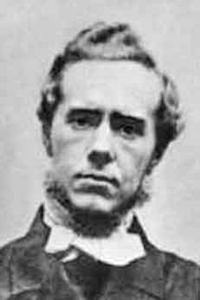
Hudson Taylor, missionary to China and founder of what is
today known as the Overseas Missionary Fellowship, gave this excellent advice:
"Let us give up our work, our plans,
ourselves, our lives, our loved ones, our influence, our all, right into God's
hand; and then, when we have given all over to Him, there will be nothing left
for us to be troubled about."
We also need to recognise that many of our
worries are often unfounded and unnecessary.
Such as in the case of the bassoon player who came up to his conductor,
Toscanini, and nervously said that he could not reach the high E flat.
Toscanini just smiled and replied, "Don't worry. There is no E flat in
your music tonight."
PRIORITIES
Jesus
gives us a great antidote to worry - put God first. That is the other message contained in today’s
reading. Jesus said “seek first
[God’s] kingdom and his
righteousness, and all these things will be given to you as well.”

In a Berlin art gallery there is a painting by German
painter Adolf Menzel. The painting is only partially finished. It shows Fredrick the Great speaking with
some of his generals. Menzel painted the
generals and background, but he died before he could complete the king.
To be a
follower of Christ, means to learn to put Christ centre stage. And it is only when we do this, when we seek
to make him our true priority, that everything else falls into place.
When we
put Christ first we focus our attentions on Him, rather than on our worries,
and most importantly of all we learn to trust Him.
This of
course doesn’t mean that our lives will be without its challenges or troubles,
but it is the path that leads to peace and joy.
Because our hope and confidence is built not on our outer circumstances,
or on people or institutions, but on the God of love and compassion, who
promises to be with us always, in good times and bad.
It is
this knowledge, and confidence that produces the joy filled life.

The joy filled life which enabled Richard
Wurmbrand who was imprisoned for 14 years in Romania for preaching the Gospel,
to declare that “Alone in my cell, cold,
hungry, and in rags, I danced for joy every night.” It is the confidence and hope that enabled
Paul to write I consider that our present sufferings are not worth comparing
with the glory that will be revealed in us. (Romans 8:18)
When we
trust God, and place Him first in our lives, we find the path to true peace and
joy.
I want to finish with a
poem:
Trust Him
when dark doubts assail you,
Trust Him
when thy strength is small,
Trust Him
when to simply trust Him
Seems the
hardest thing of all.
Trust
Him, He is ever faithful,
Trust
Him, for his will is best,
Trust
Him, for the heart of Jesus
Is the
only place of rest.
Friday, 6 May 2011
Easter: Death Defeated, Sins Forgiven, New Life & New Hope
This is Jonah. As you can see from the picture, he is a cheeky twenty month old boy, full of life.

But exactly five weeks ago, on Sunday March 20th, Jonah suffered a tragic accident. In his back garden there is an old pond that had been drained, but overnight the pond had become filled with rain water, and Jonah fell into the pond – he was found floating face down in the water. It is every parents’ worst nightmare.
It just happened that that day, Jonah’s mum Paula had invited a friend for lunch who was a paediatric nurse, she was the one who battled to safe Jonah’s life, and eventually after an agonising few minutes managed to resuscitate him. Jonah was then rushed into hospital where doctors battled for 7 hours to stabilise him before he was transferred onto the Intensive Care Unit at Great Ormond Street Hospital.
Jonah was in a coma for 50 hours, and his parents were told he was brain damaged.

For Jonah’s parents, who are Christians, those 50 hours he was in a coma felt like a lifetime. However, despite all the odds, Jonah eventually came out of the coma. His parents were told that his expected stay on the neurology ward would be anything from 3 months to a year depending on the severity of his brain injury.

But incredibly 9 days later he was back home. His parents write “Today we rejoice that Jonah is 100% the cheeky and mischievous little lad that he was when he woke up on that Sunday morning. His restoration to health has baffled medics and for this we give all the glory to God.”
It’s an amazing and deeply moving story, and there are some obvious parallels with the story of Easter, which we celebrate today.
Because on Easter Sunday, an even greater miracle happened, because Jesus who had suffered a long and agonising death on the cross, and who had been in the tomb for three days, rose from the grave.
It is clear reading the accounts of the resurrection, that although Jesus had talked about being raised from the dead, no one had expected it. Because the response of those that found the empty grave was one of amazement and shock, and their initial response was that someone must have stolen Jesus’ body, but in fact he had risen from the dead!
Of all the events in history ever to have happened, the resurrection of Jesus from the dead is the greatest event of them all, it was a day that changed the world for ever.
So what does Jesus’ resurrection mean for us today?
DEATH DEFEATED
Jesus’ resurrection proves that once and for all death has been defeated. Whilst we know one day we will die, we know also that there is life beyond death. And this gives us a living hope for the future. This is why Paul in 1 Corinthians writes “Where, O death, is your victory? Where, O death, is your sting?” The sting of death is sin, and the power of sin is the law. But thanks be to God! He gives us the victory through our Lord Jesus Christ. (1 Cor 15:55-57)
For those who place their faith in Jesus, death should no longer holder the fear it once did. This is why the Apostle Peter writes “Praise be to the God and Father of our Lord Jesus Christ! In his great mercy he has given us new birth into a living hope through the resurrection of Jesus Christ from the dead.” (1 Peter 1:3)
The living hope that Peter talks about is a real, certain hope, based on the victory Jesus has won for us on the cross.
SINS FORGIVEN
Because of Jesus’ resurrection there is the promise of sins forgiven.
On the cross Jesus paid in full the penalty of our sin, which is why Peter writes "For Christ died for sins once for all, the righteous for the unrighteous, to bring you to God." (1 Peter 3:18)
Through his death and resurrection Jesus has dealt with the sins that mar our relationship with God and with one another.
Not long before she died in 1988, Marghanita Laski, a well known secular humanist and novelist, said, "What I envy most about you Christians is your forgiveness; I have nobody to forgive me."
Because of Jesus’ resurrection we can have the promise of forgiveness, and fresh start with God. This promise of a new beginning is so important, because which one of us hasn’t made mistakes in the past. Which one of us has not thought at some point in our lives ‘I wish I could start over again’. And with God, that new beginning is possible, what the resurrection proves is that no one is beyond the reach of God’s love, and this brings with it new life and new hope.
NEW LIFE & NEW HOPE
Jesus offers all those who come to him new life, life as only God can give – life with meaning and purpose, because Jesus is “the way, the truth and the life.”
This is why Paul writes, ‘The One who died for us—who was raised to life for us!—is in the presence of God at this very moment sticking up for us. Do you think anyone is going to be able to drive a wedge between us and Christ's love for us? There is no way! Not trouble, not hard times, not hatred, not hunger, not homelessness, not bullying threats, not backstabbing… None of this fazes us because Jesus loves us. I'm absolutely convinced that nothing—nothing living or dead, angelic or demonic, today or tomorrow, high or low, thinkable or unthinkable—absolutely nothing can get between us and God's love.’ (Romans 8:35-37)
Jesus has done all this for us, and what he wants from us, is to let him live at the centre of our lives so that we can experience purpose and meaning, hope and healing, peace, and joy that only he can give. He wants to be the risen Lord of your life!
CALLED TO BE EASTER PEOPLE
As Christians we are called to be Easter people. To follow the example of Jesus, and to proclaim the resurrection.
The trouble is that sometimes I have to recognise that I often deny the resurrection. Every time I do not serve my neighbour, every time I do not serve the poor, every time I participate in an unjust system, every time I am dishonest, every time I lie, every time I am greedy, I deny the resurrection.
And I affirm the resurrection – when I stand up for those who are on their knees, when I weep for those who have no more tears to shed, when I extend the hand of friendship to someone in need, when I show compassion and mercy, when I reach out to someone in the love of God, I affirm the resurrection.
This is what it means to be an Easter people, this is what it means to follow the example of Jesus, and to proclaim the resurrection. This is why the resurrection matters – because through it God changes lives, starting with us.
Have you allowed Him to change your life?
Jonah
This is Jonah. As you can see from the picture, he is a cheeky twenty month old boy, full of life.
But exactly five weeks ago, on Sunday March 20th, Jonah suffered a tragic accident. In his back garden there is an old pond that had been drained, but overnight the pond had become filled with rain water, and Jonah fell into the pond – he was found floating face down in the water. It is every parents’ worst nightmare.
It just happened that that day, Jonah’s mum Paula had invited a friend for lunch who was a paediatric nurse, she was the one who battled to safe Jonah’s life, and eventually after an agonising few minutes managed to resuscitate him. Jonah was then rushed into hospital where doctors battled for 7 hours to stabilise him before he was transferred onto the Intensive Care Unit at Great Ormond Street Hospital.
Jonah was in a coma for 50 hours, and his parents were told he was brain damaged.
For Jonah’s parents, who are Christians, those 50 hours he was in a coma felt like a lifetime. However, despite all the odds, Jonah eventually came out of the coma. His parents were told that his expected stay on the neurology ward would be anything from 3 months to a year depending on the severity of his brain injury.
But incredibly 9 days later he was back home. His parents write “Today we rejoice that Jonah is 100% the cheeky and mischievous little lad that he was when he woke up on that Sunday morning. His restoration to health has baffled medics and for this we give all the glory to God.”
It’s an amazing and deeply moving story, and there are some obvious parallels with the story of Easter, which we celebrate today.
Because on Easter Sunday, an even greater miracle happened, because Jesus who had suffered a long and agonising death on the cross, and who had been in the tomb for three days, rose from the grave.
It is clear reading the accounts of the resurrection, that although Jesus had talked about being raised from the dead, no one had expected it. Because the response of those that found the empty grave was one of amazement and shock, and their initial response was that someone must have stolen Jesus’ body, but in fact he had risen from the dead!
Of all the events in history ever to have happened, the resurrection of Jesus from the dead is the greatest event of them all, it was a day that changed the world for ever.
So what does Jesus’ resurrection mean for us today?
DEATH DEFEATED
Jesus’ resurrection proves that once and for all death has been defeated. Whilst we know one day we will die, we know also that there is life beyond death. And this gives us a living hope for the future. This is why Paul in 1 Corinthians writes “Where, O death, is your victory? Where, O death, is your sting?” The sting of death is sin, and the power of sin is the law. But thanks be to God! He gives us the victory through our Lord Jesus Christ. (1 Cor 15:55-57)
For those who place their faith in Jesus, death should no longer holder the fear it once did. This is why the Apostle Peter writes “Praise be to the God and Father of our Lord Jesus Christ! In his great mercy he has given us new birth into a living hope through the resurrection of Jesus Christ from the dead.” (1 Peter 1:3)
The living hope that Peter talks about is a real, certain hope, based on the victory Jesus has won for us on the cross.
SINS FORGIVEN
Because of Jesus’ resurrection there is the promise of sins forgiven.
On the cross Jesus paid in full the penalty of our sin, which is why Peter writes "For Christ died for sins once for all, the righteous for the unrighteous, to bring you to God." (1 Peter 3:18)
Through his death and resurrection Jesus has dealt with the sins that mar our relationship with God and with one another.
Not long before she died in 1988, Marghanita Laski, a well known secular humanist and novelist, said, "What I envy most about you Christians is your forgiveness; I have nobody to forgive me."
Because of Jesus’ resurrection we can have the promise of forgiveness, and fresh start with God. This promise of a new beginning is so important, because which one of us hasn’t made mistakes in the past. Which one of us has not thought at some point in our lives ‘I wish I could start over again’. And with God, that new beginning is possible, what the resurrection proves is that no one is beyond the reach of God’s love, and this brings with it new life and new hope.
NEW LIFE & NEW HOPE
Jesus offers all those who come to him new life, life as only God can give – life with meaning and purpose, because Jesus is “the way, the truth and the life.”
This is why Paul writes, ‘The One who died for us—who was raised to life for us!—is in the presence of God at this very moment sticking up for us. Do you think anyone is going to be able to drive a wedge between us and Christ's love for us? There is no way! Not trouble, not hard times, not hatred, not hunger, not homelessness, not bullying threats, not backstabbing… None of this fazes us because Jesus loves us. I'm absolutely convinced that nothing—nothing living or dead, angelic or demonic, today or tomorrow, high or low, thinkable or unthinkable—absolutely nothing can get between us and God's love.’ (Romans 8:35-37)
Jesus has done all this for us, and what he wants from us, is to let him live at the centre of our lives so that we can experience purpose and meaning, hope and healing, peace, and joy that only he can give. He wants to be the risen Lord of your life!
CALLED TO BE EASTER PEOPLE
As Christians we are called to be Easter people. To follow the example of Jesus, and to proclaim the resurrection.
The trouble is that sometimes I have to recognise that I often deny the resurrection. Every time I do not serve my neighbour, every time I do not serve the poor, every time I participate in an unjust system, every time I am dishonest, every time I lie, every time I am greedy, I deny the resurrection.
And I affirm the resurrection – when I stand up for those who are on their knees, when I weep for those who have no more tears to shed, when I extend the hand of friendship to someone in need, when I show compassion and mercy, when I reach out to someone in the love of God, I affirm the resurrection.
This is what it means to be an Easter people, this is what it means to follow the example of Jesus, and to proclaim the resurrection. This is why the resurrection matters – because through it God changes lives, starting with us.
Have you allowed Him to change your life?
Friday, 17 September 2010
Creating a Culture of Welcome
INTRODUCTION
Next Sunday is Back to Church Sunday, when we are encouraged to invite people back to church. As we prepare for this important event, I want us to think about the topic of welcome and hospitality, particularly in relation to the church.
Welcome in the Bible
The theme of hospitality and welcome is an extremely important one in the Bible. In the Middle East great value has always been placed on hospitality. In the biblical culture extending hospitality was not simply a courtesy but an obligation. Travel in the ancient Mediterranean world was fraught with difficulty and danger. Inns where people could stay were few and far between, and travellers were dependent on locals for life sustaining food, water and shelter.
Whilst hospitality has always been important in the different cultures of the Middle East, it had particular significance for the Israelites. The Israelites themselves had been strangers in foreign lands and had experience of wandering from place to place, and this experience shaped and influenced the way they themselves looked after strangers. For example in Deuteronomy 10:17, 19 it says, "For the Lord you God…loves the strangers, providing them food and clothing. You shall also love the stranger, for you were strangers in the land of Egypt." So for the Israelites proper treatment of the stranger was a just and grateful act in response to God's loving provision.
In the New Testament hospitality also has a central role to play. Jesus' itinerant ministry took him too many places, and he was very much dependant upon the hospitality that people provided. The most famous pictures of that hospitality are Mary and Martha's entertainment of Jesus and when Jesus invited himself to the home of Zaccheaus. When Jesus sent his disciples out on mission, he sent them out on the assumption that they would receive hospitality along the way.
In Hebrews 13:2 we read "Do not neglect to show hospitality to strangers, for by doing that some have entertained angels without knowing it."
This therefore raises the question, how good are we as a church when it comes to welcoming visitors? St Martin's does pride itself as being a welcoming caring community, and I think there is a lot of truth in that. But I've also yet to visit a church that doesn't think of itself as being welcoming and friendly. George Fisher, who is the Director of Parish Mission for Lichfield Diocese has travelled extensively around the diocese visiting churches as part of his job. He tells a story where he visited one church in the west of the Diocese, and was disappointed that they didn't do refreshments after the service. When George got back home he wrote an email to the vicar and said had they considered providing refreshments after the service. To which he received the reply, we do have refreshments, but we wait for the visitors to go before we serve them!
In research conducted by Bob Jackson whilst he was Archdeacon of Walsall, he discovered that between 90% to 99% of people who visit churches do not become regular worshipping members. Just think what a difference it would make to churches like our own, if say 10 or 15 percent of those people who visited us decided to stay?
What can we do therefore to make St Martin's an even more welcoming and open church to those who visit us. There are a number of lessons we can all learn about hospitality from our reading from Genesis 18 in which Abraham & Sarah welcome three strangers to their home.
Abraham's Example
"The LORD appeared to Abraham near the great trees of Mamre while he was sitting at the entrance to his tent in the heat of the day. Abraham looked up and saw three men standing nearby. When he saw them, he hurried from the entrance of his tent to meet them and bowed low to the ground."
The first thing to notice is that when Abraham saw the three visitors, he hurried over to them and did everything he could to make his guests feel welcome. He didn't just leave them standing near his tent, uncertain as to what to do, Abraham took the initiative to welcome them to his home. When people visit St Martin's we can all do our part to make them feel welcome, to take the initiative to invite people into the church, to introduce ourselves, and take an interest in the people who are visiting, and above all to put them at ease.
Going into a church building for the first time can be quite a daunting experience, especially if you are not used to attending church, and so the welcome you receive from the people in the church is extremely important. Just put yourself into the shoes of someone coming to church for the first time, imagine what it might feel like to go into a place which is unfamiliar, and where you don't know anybody, but where everyone seems to know one another. Even though I have attended church all my life, I still feel uncomfortable going to a new church for the first time. The typical worries that go through my head are will I know what to do during the service, where are the toilets, are the any facilities for the children, can my children join the Sunday School, etc.
For someone to come over, smile, shake your hand and welcome you to the church can make all the difference. We can all too easily assume that people know what to do during a service, or assume that people will know that they are invited to stay for tea and coffee following the service, but that is not always the case.
Whilst hospitality often starts with a greeting and a handshake it does not end there. When Abraham came to the visitors he "bowed low to the ground." In other words when Abraham greeted his visitors, he made himself their servant.
In Poland there is a saying that "a guest in the house is God in the house." This is one of the reasons why the Polish are renowned for their hospitality. When it comes to welcoming visitors to St Martin's we need to have that same attitude, welcoming visitors as if they were God himself.
Abraham took care of his guests every need. For example we see that after their long journey on a hot and dusty road, Abraham offers his guests water to wash their feet, and he shows great sensitivity to the needs of his guests as he invites them to rest under the shade of a tree, in the place of honour, whilst the meal is being prepared.
When people come to church, it could be for a whole host of reasons. It may be that some are coming in search for sanctuary and rest from troubles in their lives, and so like Abraham we to be sensitive to their needs. And we also need to be aware that some people may have had difficult or painful experiences in the past to do with church or with other Christians, and so physically coming into a church building can raise all sorts of emotions.
As Abraham's guests ate their meal, Abraham took the attitude of a servant. He saw it as his personal responsibility to see that all needs were met. Verse 8 we read "While they ate, he (ABRAHAM) stood near them under a tree.." In other words, he waited on them.
This is how we need to treat visitors when they come into St Martin's. Each guest is a guest of honour. We don't want to flock over them in such numbers that we threaten to overwhelm them, but certainly we need to make certain that each visitor is given proper hospitality. William Temple, a former Archbishop of Canterbury said "The church is the only organization that exists primarily for the benefit of non-members." As a church family we have a responsibility and a concern for those people who are not yet full members of our church family.
Nigel McCulloch, the Bishop of Manchester has a 3 minute rule that he encourages the people in his diocese to follow. The idea of the 3 minute rule is that for at least the first three minutes in church you go and speak to someone you don't know before speaking to those you do know. This would be a good rule for us to try and follow. When people visit St Martin's we all have a responsibility to make them welcome, to go that extra mile by serving and ministering to them, making them feel welcome, and seeing to their needs.
Inviting people to St Martin's
So far I have talked about hospitality and welcoming people to St Martin's. Next week we have an opportunity to invite people we know to a special service here at St Martin's for Back to Church Sunday.
We have taken part in this initiative over the last few years, and as a result of Back to Church Sunday a number of people have become regular worshipers here at St Martin's. The wonderful thing about extending welcome and hospitality to visitors to St Martin's is that it is something we can all do, and so is Back to Church Sunday.
Research conducted by the Christian Charity Tearfund revealed that up to 3 million people in Britain would go back to church if ONLY THEY WERE INVITED.
In our Gospel reading we have the invitation to 'Come' repeated twice. First of all when Jesus invites two of John's disciples to 'Come' and see where he is staying, and then when Philip tells Nathanael to 'Come and see' Jesus. It is a simple, yet powerful invitation. I am would like you to think and pray about one person you would like to invite to 'Come' to church next Sunday. We want to extend an invitation for people to come to St Martin's and discover what this church has to offer them, to come into a community where they will find love and acceptance, and above all come to a place where they will meet with the living God.
When we practice real hospitality to people, we entertain God himself. In Matthew 25, in the parable of the sheep and the goats Jesus says For 'whatever you did for one of the least of these brothers and sisters of mine, you did for me.' When we practice hospitality, we entertain God himself.
Subscribe to:
Posts (Atom)