Wednesday, 16 February 2011

The Mission to Seafarers


The Mission to Seafarers traces its origins back to the early 19th century, to a young Anglican clergyman called John Ashley.


In 1835 John Ashley was holidaying on the Bristol Channel. Walking along the cliffs one day he noticed a large fleet of sailing ships lying out in the channel waiting for a favourable wind to take them out to sea. He made some enquiries amongst the locals, and was told that no clergyman visited these ships, and so the next day he hired a boat and set sail for the fleet.


Ashley was so moved by the conditions he found the seafarers living in, that he decided to leave parish ministry and devote the rest of his life to serving seafarers.


Over a period of 15 years, John Ahsley visited thousands of ships at sea, taking services, and giving away thousands of Bibles & prayers books to British seamen.


John Ahsley's example inspired other clergy to start similar ministries amongst seafarers in different parts of the country, and in May 1858, The Missions to Seamen, as it was then known, was officially born.


The logo for this newly formed organisation was a Flying Angel. 


The inspiration for this was drawn from Revelation 14:6 "Then I saw another angel flying in midair, and he had the eternal gospel to proclaim to those who live on the earth—to every nation, tribe, language and people." And it is this verse of Scripture which underpins all that the Mission to Seafarers stands for. The object of the society has always been to care for the spiritual and physical welfare of all seafarers, and to proclaim the eternal Gospel to all people. From this small beginnings in the Bristol Channel, the Mission to Seafarers has grown, and now has full time chaplain's in more than 100 ports around the world, and is represented in some 130 others by honorary chaplains. 


Life of Seafarers


There are approximately 1.2 million merchant seafarers worldwide. 95% of all the goods brought into the UK, come by sea, so seafarers play a vitally important role in all our lives, but despite that the expression 'out of sight, out of mind' could easily be applied to seafarers. 


Thanks to the success of the Fairtrade campaign, we are a lot more aware about where our food comes from, and who produces it. But I suspect that people rarely ever think about the people that bring these goods to this country by sea, and the conditions they have to live and work in.


The life of seafarers is very demanding:


Isolation – the BIGGEST problem, crews away from home for months, sometimes (18 months or more). Little or no contact with families. Miss key events – birthdays, weddings, funerals, religious festivals. Constantly on move from one port to another.

ADDING to problems of isolation are:
  • Small crews – more work
  • Multinational crews – no shared language


Short turn around times in ports – changes in shipping industry mean ships now spending more time at sea. I visited one car carrying which after 2 weeks at sea, spent only 6 hours in port before leaving for its next destination.


Dangerous working conditions – on average 230 ships worldwide are lost every year, this accounts for around 2000 lives. But we rarely hear about this. Imagine the reaction if every single year 37 airliners crashed – you would expect to hear about it. But you don't when it comes to seafarers. 


Flags of convenience – this is the practice of registering a ship in a different state from the ship's owners. For example, the ship might be owned by a Japanese company, but fly the flag of Liberia or Panama. The advantage for the ship owner is that registering a ship under a flag of convenience means cheap registration fees, low or no taxes and freedom to employ cheap labour. But for the seafarers it often means that their basic human rights are not respected or upheld, such as the hours they should work, what conditions on board should be like, how much they get paid and so forth. It is like being able to register a car in Liberia so I can drive it on British roads without having to get the brakes fixed. Some seafarers describe their job is like being 'at prison with a salary'. But the Maritime Charities Funding Commission actually found that the provision of 'leisure, recreation, religious services, and communication facilities is better in UK prisons than on many ships.' 


Piracy – in 2010, 445 incidents of piracy:
53 vessels were hijacked                                 

1181 crew were taken hostage                                

8 crew killed                                     

Somalia accounts for 92% of the 2010 figures                
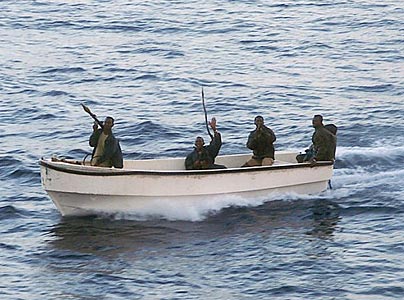


Economic Downturn – having big impact on shipping industry. Lots of ships being 'laid up' – there is a human cost to this story, skeleton crews left on these ships, with little or no means of escaping.


Ship abandonment –there are currently 112 cargo ships lying abandoned in docks around the world, leaving hundreds of seafarers stranded without pay and with no way to get home. Ships are often abandoned by their owners it they run into financial difficulties, or if ships are detained for breaking safety regulations. It is often cheaper for the owner to abandon the ship than pay for improvements. 


This photo is of the The Most Sky, a Turkish owned ship sailing under the flag of Panama, and lying abandoned in Birkenhead. On board this ship there was a crew of 11 Georgians. The conditions on board were terrible. They had no heating apart from an old kebab grill, the bunks were soaking wet, and the man assigned to catering duties could only cook potatoes. When eventually 8 members of the crew were paid and repatriated, they were arrested in Turkey on false charges.


The role of the Mission to Seafarers


The Mission to Seafarers seeks to care for the spiritual and physical needs of seafarers of all races and creeds. But the heart of this ministry is a desire to share with these seafarers the love of God. In Matthew's Gospel Jesus commended those who feed the hungry, give water to the thirsty, welcomed the stranger, clothed the naked, looked after the sick, and visited the prisoner. He said "I tell you the truth, whatever you did for one of the least of these brothers of mine, you did for me." (Matthew 25:40). This parable really embodies what the Mission to Seafarers strives to do. 


Mission to Seafarers in 2010 chaplains & volunteers 


Visited more than 76,000 ships 
Dealt with over 400 justice and welfare cases involving 800 seafarers

Welcomed more than 640,000 seafarers to their centres

Provided transport for 680,000 seafarers

Visited nearly 600 seafarers in hospital

Distributed 175,000 Bibles and other items of Christian literature

Helped send 622,000 telephone & email calls on behalf of seafarers


Auckland Mission:


My jobs included:

Ship visiting – friendly face, not demanding anything from seafarers, there only to help & support. The captain of one ship wrote to the chaplain in Mombassa, We cannot say enough how grateful we are for the overflowing warmth and hospitality that was given to us.
Welfare cases – Chaplains are often the first people the crew turn to
- ship came into Auckland with no fresh food or water, we ensured crew had enough food to get to next port & reported ship to International Maritime Authority.
Filipino sailor Lito, came to help, after not be paid. Are intervention helped secure the $2000 he was owed.
Japanese sailor – injured in accident on ship, fearful of leaving ship & loosing job, we were able to contact Chaplain in Fiji – the ships next port of call, to ask them to check on this man.
A seafarer wrote. Recently I was assisted by your chaplain in Thailand who went out of his way to assist me. It makes me feel that if ever there was a problem and I need to discuss something, then your society can be relied upon.
Help in times of personal crisis – floods in Philippines
SHIP ABANDONMENT – providing food & clothes, helping then stay in touch with their families, campaigning on behalf of seafarers to secure their pay and get their repatriated to their families.
Centre
- known as 'Flying Angel Clubs' by Seafarers because of the logo. They are a place for seafarers to come & relax, watch TV, or play snooker, or pool. Small shop selling food, cheap clothes, and souvenirs, & book and video library, which the seafarers could take with them to sea. Chapel at heart of centre – a place for seafarers to come &; pray. Cheap phone calls & internet so people can stay in touch with families. The year I was in Auckland we made over 15,000 international phone calls, to over 112 different countries. An average of 40 international calls a day! And we welcomed 22,000 visitors from 95 different countries to our centre.


The Mission to Seafarers Today


As the Shipping Industry changes, so the Mission to Seafarers is also changing in order to continue to meet the needs of seafarers. For example in 2007 Prince Charles launched the MV Flying Angel in Dubai, so they can reach the 100 -150 ships that are moored off the coast of Dubai every day. One Russian Captain said this "There are very few places we can step down from our ship. On the route we are on from Saudi to East Asia. This is the first time I have stepped down from the ship in 6 months."


Increasingly, as ships spend less time in port, chaplains are increasingly taking on board ships mobile phones & laptops so seafarers can contact their families. 


2008 Strategic review - new Centres being developed around the world. For example, the Mission is expanding its work in the port of Belem, which is on the banks of the Amazon estuary in Brazil. And in 2008 two new seafarer's centres were opened in Mangalore & Tuvalu


How you can help


So how can we support seafarers, and the work of the Mission to Seafarers?


Prayer


In 1 Thessalonians we are encouraged to pray continually. We need to remember the seafarers, and for the hardships they experience for our sake. To pray for them as they spend many months sometimes years away from their families. We should pray for their safety at sea. For those seafarers who are inadequately fed and clothed. Our prayers are important to the seafarers. This is what the crew of the Black Bart, stranded in NZ for three months wrote to the chaplain. We thank you for your prayers that keep us strong to stand in time of our needs. We can't repay for what you've done to us which we can't forget in a lifetime.


Focus on work of Mission to Seafarers on Sea Sunday – every July


Financial Support


The Mission to Seafarers relies upon the financial support that it receives from churches and individuals to enable its work to continue. The money raised helps support mission centres across the world.


The work of the Mission to Seafarers continues day by day, throughout the world, and truly makes a difference to the lives of countless thousands of men and women who work at sea. It is Christian love in action. We depend upon seafarers all year round, it is important that we remember them in our prayers and remember the Church's ministry to them. Master Mariner John Clark said this about the work of the Mission to Seafarers. It is my firm belief that seafarers need the ministry of the Mission to Seafarers more than ever. There are so many abuses perpetrated on seafarers today which the Mission has to deal with and seeks to address. There are also many thousands of Christian men and women at sea who are away from their families and home churches for many months, who rely on the Mission for spiritual support.


Jesus said, 'I tell you the truth, whatever you did for one of the least of these brothers of mine, you did for me.'


To visit the official Mission to Seafarers website please click HERE

Who do you say I am? (Mark 8:27-30)


Throughout life we are faced by lots of questions that require answers – some more serious than others. Yesterday I was looking at some answers that students have given to exam questions:

Q: Name the four seasons.
A: Salt, pepper, mustard and vinegar.

 
Q: What happens to your body as you age?
A: When you get old, so do your bowels and you get intercontinental.

 
Q; Name a major disease associated with cigarettes.
A: Premature death.


Q: How can you delay milk turning sour?
A: Keep it in the cow.

 
Q: What does the word "benign" mean?
A: Benign is what you will be after you be eight.

 
Q: What is a turbine?
A: Something an Arab wears on his head.

 
Q: What is a Hindu?
A: It lays eggs.


In Mark 8:27-30, Jesus asks his disciples a question of the great importance, "Who do people say I am?"

To which the disciples reply, "Some say John the Baptist; others say Elijah; and still others, one of the prophets."

Then Jesus asks another question, the most important question of all, "But what about you? Who do you say I am?"

In asking this question, Jesus gets to the very heart of what matters most, who we think Jesus truly is, and how we respond to him. Because at the end of the day, what matters most is not what others such as parents, grandparents, husbands or wives, friends of neighbours think about Jesus, but what we think.

How we answer this question should shape the rest of our lives. Because a life changing relationship with God begins with the answer to the question – "Who do you say that I am?" The rest of life is a journey – with God – living that confession to the end of this age.

What is your answer to the question "Who do you say I am?"

Friday, 11 February 2011

Reinterpreting the Law Matthew 5:21-37


Our Gospel reading this afternoon forms part of Jesus' Sermon on the Mount. We have read verses 21 through to 37, but this particular section, which is clearly designed to be read as a whole, runs through to verse 48, and consists of six units of teaching, each introduced by the phrase 'You have heard that it was said… But I say to you….'

In the section we read today we have four units of teaching, where Jesus tackles the issue of murder, adultery, divorce and swearing oaths. We could very easily have a sermon or even a sermon series on each of these different sections of teaching, but today I want to have an overview of the passage.

Jesus is concerned with our attitude to God's law, which Jesus makes clear when he says "Do not think that I have come to abolish the Law or the Prophets; I have not come to abolish them but to fulfil them."  (Mt 5:17)

This raises the important question do the Old Testament laws still apply to us today? In the OT there were three categories of law, ceremonial, civil and moral.

The ceremonial law related specifically to Israel's worship, for example rules about offering sacrifices as sin offerings. Jesus came into the world as the Lamb of God, to die for us on the cross. The apostle John writes 'This is love: not that we loved God, but that he loved us and sent his Son as an atoning sacrifice for our sins.' (1 John 4:10) So many of the ceremonial laws were no longer necessary after Jesus' death and resurrection. While we are no longer bound by these ceremonial laws, the principles behind them – to worship and love a holy God still apply.

The civil law applied God's law to daily living in Israel, for example how to deal with hired hands, how to treat the stranger, the fatherless and the widows, rules about loaning money and so forth. Our modern society and culture are radically different to that of ancient Israel, so many of these civil laws cannot be followed specifically in our day and age. But the principles behind these commands, such as a concern for justice and fairness and caring for the most vulnerable within our society, are timeless and should guide our conduct.

The moral law, refers to things such as the Ten Commandments, and reveals the nature and will of God, and which Jesus obeyed and upheld, and which still apply to us today.

But Jesus did challenge the enormous legislative superstructure which the scribes and Pharisees had erected as a 'fence of the law', and which placed a crippling burden upon people. For example, the broad principles of the law, such as keeping the Sabbath holy, were encrusted with a thousand rules and regulations, which must have made life incredibly difficult. Just to give you an idea of just how many petty rules and regulations there were, in AD 300 some of the laws from the scribes and Pharisees were codified in the Mishnah, which runs to 800 pages in English. In addition to this, there were commentaries written to explain the Mishnah, which are known as the Talmud. There are twelve printed volumes of the Jerusalem Talmud and sixty of the Babylonian Talmud. Jesus rejects the scribal traditions, and reaffirms the authority of the OT principle, and draws out its implications.

What Jesus was doing, was not doing away with the law as contained in the OT, but giving a fuller understanding of why God made that law in the first place. Jesus gets to the heart of what the law is about. For example, when Moses said, "Don't murder", it is not just enough to avoid killing, we must also avoid anger and hatred, because this is the root cause that can lead to murder. When the law talks about on what grounds a man (and it was the man) could divorce his wife, Jesus challenges us to live faithfulness in marriage. When the law says do not commit adultery, it is not enough to avoid adultery, we must keep our hearts from being lustful, and learn to be faithful. This is what I believe Paul meant when he talks about being transformed by the renewing of our minds. Which is why in his letter to the Philippians he writes "whatever is true, whatever is noble, whatever is right, whatever is pure, whatever is lovely, whatever is admirable, if anything is excellent or praiseworthy—think about such things." (Philippians 4:8)

Jesus' teaching is direct, to the point, and very challenging. As we listen to his words, we are challenged to reflect upon our own lives, and our values and attitudes. For example when Jesus says "If your right eye causes you to stumble, gouge it out and throw it away. It is better for you to lose one part of your body than for your whole body to be thrown into hell," (Mt 5:29) it is a challenge to examine our lives, and to deal with sin as drastically and radically as possible. Unfortunately the third century theologian, Origen, read this passage literally, and because castrated himself! But Jesus was of course speaking figuratively, calling us to examine our lives of anything that causes us to sin, and taking every necessary action to remove that sin.

Many people were good at following the word of the law, but not the spirit of the law. But Jesus reminds us that God judges our hearts as well as our deeds, for it is in the heart that our real allegiance lies. God is as concerned with our attitudes, which people don't see, as with our actions which can be seen.

The law ultimately convicts us, and reminds us that we all fall short of God's standards. Whilst we may not have murdered someone, which one of us has not felt anger towards another person at some point in our lives? Which one of us has not looked at another person and allowed inappropriate thoughts to fill our mind? Paul reminds us that "all have sinned and fall short of the glory of God." (Romans 3:23), and the apostle John wrote, "If we claim to be without sin, we deceive ourselves and the truth is not in us." (1 John 1:8).

But whilst the law shows how we fail God by our actions, it also drives us into the arms of our merciful God. Because in recognising our failings, we throw ourselves on the grace and mercy of God. Discovering our failure to love as God loves is not a cause for despair. No – it is a call back to God, into the arms of God, who loves and strengthens us, and sends us out to love again; bids us love more fully, more perfectly, because although showing perfect love is impossible for us, nothing is impossible with God.

Monday, 7 February 2011

Ministry

Later this month, we are going to be starting a calling out process to fill the vacancies on the Ministry Team, as well as hopefully calling out one or two people to train as Readers here at St Martin’s.

This morning I want to take the opportunity to talk about ministry in general, and the role of the Ministry Team within the life of St Martin’s, and the calling out process.

MINISTRY IS SHARED

Two weeks ago George Fisher the Director of Parish Mission, came and spoke to us, and in his talk he used the analogy of fishing to describe the task of outreach and evangelism.


He said that very often we tend to think of fishing as being a solitary activity, whereas in Jesus’ day, fishing involved a group of people working together as a team to bring in the catch.  


George made the point that evangelism and outreach isn’t the sole responsibility of the vicar, or the gifted evangelist, but each one of us.

In the same way as Christians we are all called into ministry, because ministry is living our lives in service of God, bearing witness to Christ, and this is the calling of every single one of us.
One of the first things Jesus did when he began his public ministry was to call a group of people to be his disciples, and share in his ministry. Jesus wasn’t just a one man band, he clearly saw it as important to involve others in his ministry.  And it wasn’t just the twelve disciples.  In Luke 10 we read that Jesus appointed 72 people and sent them ahead two by two to every town and place where he was about to go (Luke 10:1).  And in Acts 1, we read how Matthias was appointed to replace Judas Iscariot, as one of the twelve disciples.  In choosing Matthias, the apostle Peter says “it is necessary to choose one of the men who have been with us the whole time the Lord Jesus was living among us, beginning from John’s baptism to the time when Jesus was taken up from us. For one of these must become a witness with us of his resurrection.” (Acts 1:21-22) 

What is clear is that teamwork is a vital part of life in the body of Christ. God’s work involves many different individuals with a variety of gifts, talents and abilities. There are no superstars in this task, only team members performing their own unique roles. 

TEAMWORK REQUIRES EVERYONE’S CONTRIBUTION:


God has given His church an enormous responsibility, to make disciples in every nation (Matthew 28:18-20). This involves preaching, teaching, healing, nurturing, giving, administering, building and many other tasks. If we had to fulfil this command as individuals, it would be impossible. But God calls us as members of His body. Some of us can do one task; some can do another. Together we can serve God more fully than any one of us could ever do alone. It is a human tendency to overestimate what we can do individually and to underestimate what we can do as a team! As the body of Christ, we can accomplish more together than we would ever dream possible, working alone. Working together, the church can express the fullness of Christ.

TEAMWORK MAKES OUR OWN EFFORTS GO MUCH FURTHER:

Peter portrays the church as a living, spiritual house, with Christ as the foundation and cornerstone and each believer as a stone. 


While Paul portrays the church as a body, with Christ as the head and each believer as a member. Both pictures emphasize community. One stone is not a building or even a wall; one body part is useless without the others.  It is a reminder that we are the church, and each one of us has an important role to play within the life of the church.  It also reminds us that within our very individualistic world, we are dependent upon one another, and so when God calls you to a task, remember that He is also calling others to work with you. Together our individual efforts will be multiplied, so that collectively we can allow Jesus to build a beautiful house. 

THE ROLE OF THE MINISTRY TEAM

Here at St Martin’s the Ministry Team plays a very important role within the life of the church. 

The Ministry Team is structured around the four core areas within the life of the church.  Prayer and Worship, Evangelism and Outreach, Justice and Care and Teaching and Nurture, with two people representing each of the core areas (eight in total).  In addition there are a number of ex officio members of the Ministry Team, including Phill as Curate, Penny as Reader and myself as Vicar.  In addition one of the Wardens usually attends the Ministry Team meetings. 

The Ministry Team exists, not to do all the work within the life of the church, but to equip, encourage and enable each one of us in our own individual ministry and calling.  Every month the Ministry Team meets to pray together for the life of the church, and to discuss issues that relate the four core areas of evangelism and outreach, justice and care, teaching and nurture, and prayer and worship. 

Having worked alongside the Ministry Team for the past five years, I have seen at first hand the really important role the Ministry Team has in building and growing St Martin’s, and in giving good spiritual leadership.  St Martin’s is growing, and God is doing great things in the life of this church, and I believe a large part of this is down to the work of the Ministry Team.  For example, two key areas of growth are Messy Church and St Martin’s Café.  Both these initiatives were first discussed and prayed about within the Ministry Team, and members of the MT have taken a leading role developing these initiatives and encouraging and enabling others within the church to be involved with these projects.


We will be starting a calling out process later this month to fill a number of vacancies on the MT, and also to hopefully call out someone to train as a Reader.  Please start praying for this calling out process, that God will place on your heart the right people will be found for this important role within the church. We are not looking for perfect people, but people who have a heart for God and his people; people who are committed to working as part of a team, and who are open to God’s Holy Spirit.  As you pray about this process, pray that God may be preparing the hearts of those he is going to call out from the congregation to serve him in this way.  Please also pray for the existing members of the MT, and all they do within the life of St Martin’s.

And if you are one of the people who is called out, don’t just dismiss it, and say I don’t have what it takes, or you’re too busy, be open to the fact that God may be calling you into a new ministry within the life of his church. 

EXAMPLE OF GEESE

I started today’s sermon, by talking about the fact that as Christians we are all called to serve Christ, but we are not in this alone, we have one another.

I want to finish with a lesson from the natural world, which can teach us a lot about teamwork and supporting one another.  Most of us have probably seen Geese flying in giant V formations, but have you ever wondered why they do this? 


As each goose flaps its wings it creates an “uplift” for the birds that follow. By flying in a “V” formation, the whole flock adds 71% greater flying range than if each bird flew alone.
Lesson: We achieve much more, when we work together, and support one another. 

When the lead bird gets tired it will rotate to the back in order to rest and another bird will take its place.
Lesson: It is wise to share the difficult work and leadership responsibilities. Like geese we are dependant on each other’s abilities, capacities, gifts and talents.

The geese at the back of the formation “honk” encouragement to the birds in the front to help them keep a flying rhythm.
Lesson: Let’s be sure that our “shouts” are ones of encouragement. Any group becomes more productive when there is encouragement.

When one goose is sick or wounded and falls out of formation, two others stay with it in order to protect it. They remain until the sick bird is ready to rejoin the flock. 
Lesson: Like geese let us stay close to one another in both difficult and good times.

Sunday, 30 January 2011

Taize

This talk was given at the start of a special service of Taize Prayer, to introduce Taize style worship to those who were unfamiliar with it.
Many of you will I am sure have probably heard about Taize before, or at least be familiar with some of the Taize Chants, which we use from time to time here at St Martin’s.
Taize has played a very big role within my life, both spiritually and personally, it was the place where Beata and I first met, when we were both 19.  
This morning I wan to talk As we begin this service, I thought it would be helpful to talk a little bit about Taize, how it developed, and particularly how the unique style of Taize worship can help us to draw into the presence of God.


Taize is a small village, approximately 60 miles north of Lyon, which sits perched on a hill side in the south of Burgundy, overlooking fields of vines and sunflowers. 


Although Taize is only a tiny village, it is home to an ecumenical Christian monastic community of over 100 brothers, representing over 30 different nationalities.  Each year, Taize is visited by tens of thousands of pilgrims from all around the world, the vast majority of whom are under the age of 30. 


The Taizé Community was founded by Brother Roger in 1940. Brother Roger wanted to find a place where he could devote his life to prayer and living faithfully to God.  His journey took him from his home in Switzerland to the small desolate village of Taize, where in September 1940, he purchased a small house that would eventually become the home of the Taizé community.


During the war Taize lay only a few miles south of the demarcation line that separated Nazi occupied France in the north and Vichy France in the south.  Brother Roger’s home became a sanctuary to countless war refugees seeking shelter. On November 11, 1942, the Gestapo occupied Roger’s house while he was in Switzerland collecting funds to aid in his refuge ministry, and so he was not able to return to Taize until the autumn of 1944, when France was liberated.


Following the end of the war, other men joined Brother Roger, and on Easter day 1949 seven brother committed themselves to a life following Christ in simplicity, celibacy and community.


In the years that followed, others joined the community, from different church denominations.  Since 1951 brothers from Taize have lived amongst some of the poorest people in the world, in places such as Calcutta, Bangladesh, the Philippines, Kenya and Brazil. 


Engagement with youth culture
In the 1960s young people began to visit the Taizé community from around the world, to participate in the life of the community.  Three times a day, people gather in church for prayer. 


The village church of Taizé, which had been used for the community's prayers, became too small to accommodate the pilgrims.  So a new church, the Church of Reconciliation, was built in the early 1960s with the help of volunteers, and has been expanded several times in the subsequent decades.
With so many people visiting Taize from around the world, the question of what style of worship to adopt became very important.  Because in any given week there can be up to 40 nationalities present in Taize.  So the community started to use short songs, or chants, usually based on sentences from scripture, which are repeated again and again, which gives the music a very meditative character.  These songs are sung in many different languages, including Latin, because it is considered a neutral language – in other words it is no longer used by any one nation.   By using just a few words the chants  express a basic reality of faith, quickly grasped by the mind. As the words are sung over many times, this reality gradually penetrates the whole being, so the songs become prayers. Meditative singing thus becomes a way of listening to God.
Through these chants, little by little, our being finds an inner unity in God. They can continue in the silence of our hearts when we are at work, speaking with others or resting. In this way prayer and daily life are united. They allow us to keep on praying even when we are unaware of it, in the silence of our hearts.
Another feature of Taize worship is that silence is used a lot in the services.  I have always found it interesting to observe how at the start of a week in Taize, when people have just arrived, many struggle to be silent for up to 10 minutes.  You can sense that people are wrestles, but after a few days of being in Taize, people start to appreciate the silence, and enter into it more fully. 

We live in a very noisy world, many of us spend our lives surrounded by noise, it is no wonder that we struggle to hear God, because we don’t make time to listen to him.  So deliberately setting aside time to be quiet, is a deliberate attempt to experience communion with God without words.  The aim of the silence is not to fill up that time with our own thoughts or prayers, but to learn to be still, in the presence of God. 
Calming our souls requires a kind of simplicity: Silence means recognising that my worries can’t do much. Silence means leaving to God what is beyond my reach and capacity. A moment of silence, even very short, is like a holy stop, a sabbatical rest, a truce of worries.
Silence can make us ready for a new meeting with God. In silence, God’s word can reach the hidden corners of our hearts. In silence, we stop hiding before God, and the light of Christ can reach and heal and transform even what we are ashamed of.
In Psalm 46 God says, “Be still, and know that I am God.” The command “be still” means to “let go, surrender”, and so as we worship God this morning, that is what I invite you to do.  Let go of your worries and anxieties, let go of all that may be troubling you, and surrender yourselves to God.  We let go so that we may know that he is the one who is in ultimate control.  We give up trusting in ourselves in order to experience the glory of God’s all sufficiency, and his love for us.
So this morning, whether you are familiar with this style of worship or not, allow yourself to enter into the stillness and quiet.  As you sing the words of the chants, allow those words to speak to you, and become a prayer that speaks to your very soul. 
This for me is the beauty of Taize worship, to learn to be still, and to enter more fully into the presence of God.  


Tuesday, 4 January 2011

January the most depressing month of the year!


January is considered to be the most depressing month of the year, with Monday 24th January 2011 apparently being the most depressing day of the year according to researchers. It is not surprising, after the fun and excitement of Christmas and the New Year we come back to earth with a bump. The weather is bad, the nights are still long, there are credit card bills to be paid, and if you are anything like me, the New Year's resolutions have failed.

It is not uncommon for people to feel low, anxious or depressed at this time of the year. This should not come as a surprise, as according to the Royal College of Psychiatrists depression affects one in five people at some point in their lives.

If you know someone who is struggling with depression, anxiety, low self esteem, or any other mental health issue, the most important thing you can do is to be there for them, helping and supporting them by providing a non judgemental listening ear.

If you are someone who is going through a difficult time at the moment, here are some tips which I hope will prove helpful.

  • Seek medical help. Ask your GP what help might be available locally.
  • Live healthily. Fitness, food, and sleep matter, and can often be overlooked when we feel low.
  • Try to keep hold of God's promises in the Bible. Even if God feels distant, he isn't — it is a feeling caused by the depression. He is present, and still cares and forgives.
  • Make a choice not to withdraw from things that would normally bring a sense of pleasure, achievement, or closeness to others.
  • Think back to times when you have had a sense of closeness to God.
  • Keep a routine of prayer, even if this is really short – or ask others to pray for you.
  •  Say "no" to some things. Balance demands that you have space to recover.
Finally – remember that you are not alone! Paul in his letter to the Christians in Rome wrote: "For I am convinced that neither death nor life, neither angels nor demons, neither the present nor the future, nor any powers, neither height nor depth, nor anything else in all creation, will be able to separate us from the love of God that is in Christ Jesus our Lord." (Romans 8:38-39).


Thursday, 23 December 2010

Do Not Be Afraid (Luke 2:10)


Angels appear throughout the Christmas story, and whenever they appear the first thing they say is "Do not be afraid." This happens four times during the events of the birth of Jesus. When an angel appears to Zechariah, to inform him that his elderly wife is going to have a baby boy (John the Baptist), who is going to prepare the way for the coming Messiah, he first says to Zechariah, "Do not be afraid."

When the Angel Gabriel visits Mary to tell her that she is to bear a child, who is to be the son of God, he says "Do not be afraid."


When the angels appear to the shepherds to declare the birth of Jesus, they say "Fear not."

And when an angel appears to Joseph in a dream, he says "Joseph son of David, do not be afraid to take Mary home as your wife, because what is conceived in her is from the Holy Spirit" (Mt 1:20)

If there is one message to take from the Christmas story, a message which we need to hear today, it is this: "Do not be afraid".

We live in a world where there is great uncertainty, and where people are concerned about the future.

There are growing tensions between North and South Korea, and ongoing violence in Afghanistan and Iraq. Closer to home, there are fears about the state of our economy and terrorism. As we slowly emerge from one of the worst recessions in living memory, the Government has been forced to make painful cut backs, which affects us all. Many people have been made redundant, and many more are anxious about their futures. We have seen students taking to our streets, in protest to the increase in tuition fees, and there is the prospect that we may see more scenes like this in the coming year. And in our own personal lives too this year will have been marked as all years are by the usual mix of joy and sorrow of triumph and disaster.

So the words of the angels to "Do not be afraid" are very relevant for us today.

But why should we not be afraid? The angels go on to say "I bring you good news that will cause great joy for all the people. Today in the town of David a Saviour has been born to you; he is the Messiah, the Lord." (Luke 2:10-11)

This is the incredible message of Christmas. The creator of the universe, the eternal and everlasting God came into the world as one of us. Born not into wealth or power but squalor and poverty. Majesty in the midst of the mundane. Holiness in the filth of sheep manure and sweat. Divinity entering the world on the floor of a stable, through the womb of a teenager and in the presence of a carpenter. A more lowly place of birth could not exist.

The all powerful, all mighty God, in one instant, made himself breakable. He who was larger than the universe became a tiny infant. And he who sustains the world with a word chose to be dependent upon the care of a young couple. Emmanuel, God with us.

Jesus' birth, reminds us that God came to the world in order to make himself available, to be accessible to everyone.

And the promise Jesus gave to us was that he would be with us always, to the very end of the age (Matthew 28:20). This does not mean that life will be plain sailing, or that we will be protected from disappointments and setbacks along the way, but it does mean that God is with us in those situations. God loves us, and is with us no matter where the journey takes us, taking our hands and walking beside us, guiding and sustaining us. There is no better news. There is no greater security.

Just as God is to be found in a vulnerable and helpless child, shut out in the darkness and the cold and the grime of a stable, so he is to be found in any situation. In whatever circumstances we have to face, he is always saying to us: 'Do not be afraid. I am with you'. When we realise this, it helps to bring new life and hope to our lives, as well as the promise of a new future.

The message of the angels to us is 'Do not be afraid! To those living with the fear of war, do not be afraid! To those who are struggling to make ends meet – do not be afraid. To those who have lost their jobs - do not be afraid. To the hungry, homeless, sick and suffering in our world – do not be afraid. To the lonely and grieving – do not be afraid. Why? Because Jesus is Emmanuel, God with us.