Showing posts with label Christmas. Show all posts

Thursday, 9 June 2016

2 Chronicles 1:1, 7-13 - Queen’s 90th Birthday Talk

Talk to celebrate the Queen's 90th birthday, a lot of the talk was taken from Mark Green's article in 'Christianity'

If you could have anything you wanted – what would you ask for?

When King Solomon succeeded his father David, God said “Ask for whatever you want me to give you.”

Solomon could have asked for absolutely anything, power, money, fame, victory over his enemies, anything at all, but what does he ask for?

“Give me wisdom and knowledge, that I may lead this people.”

He didn’t seek personal gain, but put the needs of his people first. He realised that the ability to make wise decisions in the service of the people of Israel, was the most valuable asset he could have as King. In the book of Proverbs, composed by King Solomon he says ‘Wisdom is more valuable than precious jewels; nothing else compares with it.’ (Prov 3:15)

The Bible teaches that wisdom ultimately comes from God –  ‘If any of you need wisdom, you should ask God, and it will be given to you.’ (James 1:5)

Today we are celebrating the life and reign of Queen Elizabeth II.  Like Solomon, Queen Elizabeth has demonstrated great wisdom throughout her many years of service to the people of this country and the Commonwealth, and has dedicated her life to serving others.

On her 21st birthday in 1947 Princess Elizabeth made a radio broadcast from Cape Town in South Africa:
I declare before you all that my whole life, whether it be long or short, shall be devoted to your service and the service of our great Imperial country to which we all belong…God help me to make good my vow and God bless all of you who are willing to share it.
Over the years she has been faithful in fulfilling this vow. As this video illustrates:


Just as faith in God was at the centre of Solomon’s life, so it is also at the heart of Queen Elizabeth’s life. As one royal biographer put it, ‘Two things stand out – the Queen’s constant sense of duty and her devotion to God.’

The Queen has been the adviser and confidante to twelve British Prime Ministers, and knows personally many world leaders, but always demonstrates great discretion, she is careful to keep her own personal views private. But when it comes to her belief in Christ and his impact on her life she is uncharacteristically open, describing Jesus as ‘an inspiration’, a ‘role model’ and ‘an anchor’ in her life. 

In Christmas 2000 she said 

For me, the teachings of Christ and my own personal accountability before God provide a framework in which I try to live my life.
In her Christmas speech in 2002 Queen Elizabeth said:

I know just how much I rely on my faith to guide me through the good times and the bad. Each day is a new beginning. I know that the only way to live my life is to try to do what is right, to take the long view, to give of my best in all that the day brings, and to put my trust in God… I draw strength from the message of hope in the Christian gospel.

Sacrifice

Sacrifice is at the heart of the Christian gospel – Jesus giving his life for ours, and in response we are called to take up our cross daily to follow him.
But sacrifice is also intertwined with service. We no longer live for ourselves but for God and others. And this helps us to understand the Queen’s own understanding of service.
At her Coronation on the 2nd June 1953, there was one important part of the ceremony that wasn’t televised, because it was considered too sacred to show.

As Handel’s anthem Zakok the Priest’ was sung, the symbols of the Queen’s status were removed, her velvet robe, the diamond diadem, the coronation necklace, and wearing a simple white dress the Archbishop anointed her with holy oil over her hands, chest and head, to show that she was being set apart to serve and love her people in all her actions, with all her heart and with all her mind. The Royal biographer William Shawcross wrote that it was the moment of anointing with oil, which was of supreme importance for the Queen, indeed it was the most solemn and important moment of her entire life.
In this ceremony it was a reminder of Christ, who was also set apart not to be served but to serve.  This was something that the Queen reflected on in her 2012 Christmas address, when she said 
This is the time of the year when we remember that God sent his only Son “to serve, not to be served”. He restored love and service to the centre of our lives in the person of Jesus Christ.
And for Queen Elizabeth II her life has been one of unstinting service, to the people of this nation, the commonwealth, and God.
She may be our Queen, but our Elizabeth knows that she serves an even greater King, whose name is Jesus. 
St Paul said “Follow my example, as I follow the example of Christ.” (1 Cor 11:1). We could do well to follow the example of the Queen, who throughout her life has demonstrated what it means to be a whole-life disciple of Christ, through her consistency of character, a commitment to service, a concern for others and a clear dependence on Christ.


As we celebrate her life, lets pray that our nation see her for the godly woman she is; see Christ in her; learn from her and come to know the Christ she points to and honours in all she does. Amen.

Saturday, 2 January 2016

Merry Christmas, everybody's having fun?

Article in the Living Faith Column of the Walsall Advertiser, published on the 17 December 2015

Whether it be going shopping, visiting a pub or restaurant, or listening to the radio, there is no escaping Christmas music which is being played everywhere at the moment.  One of the most popular Christmas songs is Slade’s 1973 hit ‘Merry Christmas Everybody’, performed by Walsall’s very own Noddy Holder.  The chorus has these words: ‘So here it is Merry Christmas, everybody’s having fun, look to the future now, it’s only just begun’. 

It is a fun, catchy song, but despite what the lyrics say, Christmas for many people can be a sad and difficult time, whether that be as a result of bereavement, relationship problems, loneliness, unemployment, health concerns, or financial worries, etc.

Loneliness for example is said to be as bad for health as smoking 15 cigarettes a day, and is twice as harmful as obesity, and raises the odds of developing dementia by up to two-thirds. That is why the retail firm John Lewis has partnered with Age UK this Christmas to try and help some of the one million older people in the UK who go for a month without speaking to anyone.

When Jesus was born (the event we celebrate at Christmas) he was given the name Emmanuel, which means ‘God With Us’. Jesus said that the reason he came to the world was to “seek and to save the lost.” (Luke 19:10)

Because God became one of us, He knows and understands what it is like to hurt, to feel lost, lonely and afraid, because He himself has experienced these things.    

Christmas is about knowing that we are loved unconditionally by God, and that whatever circumstances we may face in life nothing can separate us His love. As St Paul wrote ‘I am sure that nothing can separate us from God’s love—not life or death, not angels or spirits, not the present or the future, and not powers above or powers below. Nothing in all creation can separate us from God’s love for us in Christ Jesus our Lord!’ (Romans 8:38-39)


Even in the midst of life’s difficulties, knowing that we’re are loved by God and that He will never abandon or forsake us, can bring a real and lasting hope to our lives, and that is one gift we could all do with this Christmas.

Christingle Talk 2015

Talk used at the Christingle Service on Christmas Eve 2015, based on John 3:16
  • What gifts are children looking forward to receiving?
  • For businesses Christmas is an important time of the year, and the first Christmas ads appeared on TV in early November. 
  • One of the most highly anticipated adverts of the year is the John Lewis Christmas ad. How many of you have seen this advert? It’s called Man on the Moon.
  • In case you haven’t seen it, let me briefly explain it to you.  It starts with a girl called Lily looking up at the moon with her telescope, when to her surprise she notices a small ramshackle hut, with an elderly man living in it.  She watches as he goes about his chores, and it is clear to her that he’s all alone up there. So she becomes determined to get something to the moon, to send him a message and show him that someone down here is thinking of him.  First of all she writes him a letter and tries to climb up a ladder to reach the moon, then she wraps the letter around an arrow to shoot it to the moon, next she tries sending up a paper airplane, but nothing works.  Then the advert cuts to the lonely old man on the moon, and floating towards suspended by balloons is a beautifully wrapped present.  The man smiles, and opens the present to discover it contains a telescope.  Using the telescope to zoom into the earth he spots the little girl waving to him from the window of her house, and he knows that someone has noticed him.
  • This advert has been viewed over 23 million times on Youtube.
  • For Christians, Chistmas is one of the most important times of the years.   The message of Christmas could be summed up by this verse from John 3:16  ‘For God so loved the world that he gave his one and only Son, that whoever believes in him shall not perish but have eternal life.’
  • In the John Lewis advert it is the girl Lilly who notices the Man on the Moon and reaches out to him in love. 
  • But the message of Christian faith is that God, seeing the needs of the world reached out to us in love, by sending his son Jesus to lay down his life for us on the cross. 
  • John 3:16 says ‘God so loved the world…’ but you could translate it as ‘God so loved YOU…. that he gave his one and only Son.’   This is the amazing truth, there is nothing you can do to make God love you more, and there’s nothing you can do to make Him love you any less. 
  • The John Lewis advert ends with these words ‘Show someone they’re loved this Christmas’, that is exactly what God did for us, when he sent his Son Jesus into the world. 
  • I asked you earlier to think about the best Christmas gift you ever received.  At a time when we receive presents we don’t always need, Christians believe God offers us a gift we cannot do without, Jesus Christ, and that through believing in Him, we can have everlasting life.
  • Reflection - I want you to think for a moment about what it means for you to know that God loves you unconditionally.  How might you respond to God’s love today?

God Of The Refugees

Christmas morning sermon 2015


There has been one story which as dominated the news this year, that is the refugee crisis.  Over 1 million refugees have made the perilous journey to Europe, the vast majority coming from Syria and Iraq. 
We are facing the biggest refugee crisis since WW2.  A report by the UN estimates that there are now 60 million people who have been forcibly displaced from their homes, and the rate of people fleeing for their lives is increasing.
For many refugees the journey to Europe took them across the sea, a dangerous journey at the hands of people smugglers which has resulted in the death of over 3,695 people. 
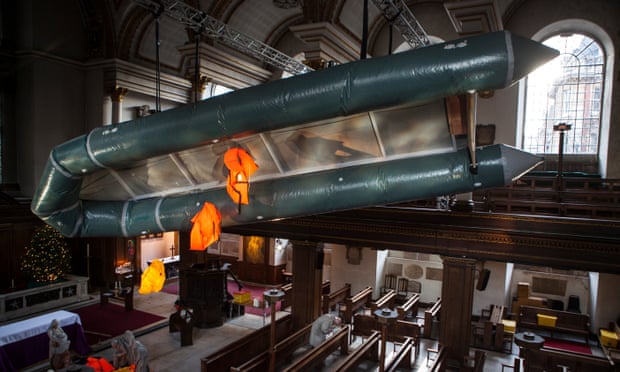
'Flight' by Arabella Dorman
Hanging from the vault of St James’ Church in Piccadilly, is an upturned refugee boat.  This dingy, designed to carry 15 people, transported 62 people from Turkey to Lesbos in Greece.  It is now an art installation by Arabella Dorman’s entitled Flight. The boat is suspended from the ceiling of the church, as if it were sinking down into the depths, and falling from its safety into the void are three life jackets: two adult-sized and one a child’s. The child’s has fallen further into the abyss, almost out of reach of the desperate parents.
So what does this have to do with Christmas?
You and I did not have any choice about when, where or how we came into the world. But God did.  And he left the comfort and splendour of his heavenly home, and chose to make himself weak and vulnerable, by being born as a human baby, totally reliant on others to feed and clothe him, to love him, care and protect him. 
He chose Mary, a young unmarried teenager, from a small, and insignificant village in Galilee to be the Mother of God.  And he chose a stable normally reserved for animals to be the place in which he entered the world, and for his bed a feeding trough. 
And the first witnesses to the birth of the Saviour of the World weren’t priests, or prophets, or politicians or Kings, people of power and influence but ordinary shepherds.  People who were looked down on by the rest of society, who because of their occupation were considered unclean, and therefore weren’t even allowed to enter the Synagogue or Temple.  Shepherds who weren’t even allowed to testify in court, because they were not trusted, and yet it was to these people that God choose to be the first witnesses of the birth of Jesus.
When God came into the world, it was in weakness and humility, so that he could identify and stand alongside the weak, the poor, the outcast, the stranger, and yes the refugee.  
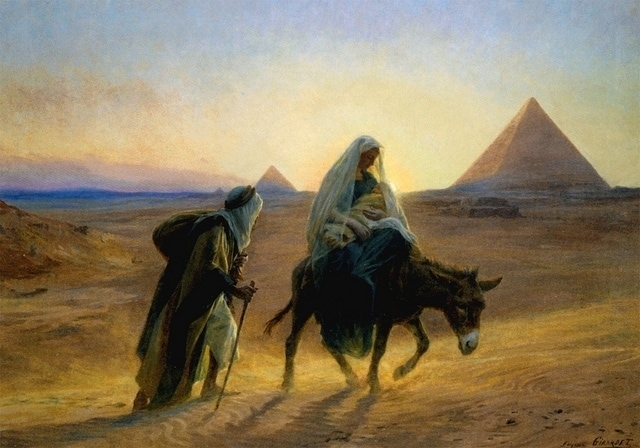
Flight into Egypt by Eugene-Alexis Girardet
Jesus himself knew what it was like to be a refugee.  He knew what it was like to face persecution, and to be forced from his home, like the tens of thousands of people in Iraq and Syria who have been forced to flee their homes to escape, persecution and death.  For Jesus the threat came from King Herod, who saw this small child as a threat to his throne.  King Herod, who had his wife and two sons killed, because he feared they were plotting against him.  So Mary, Joseph and Jesus were driven away from their home, to live in a foreign land. 
And even when Herod died, we are told that Joseph was afraid to take his family back to Judea, because Herod’s son Archelaus was ruling there, and so the family returned to Nazareth in the north.
Now understandably, we normally ignore the dark side of the nativity narrative. We have enough darkness of war and tragedy and refugees on our TV screens; some come to church at Christmas to escape from all of that and be reminded that Jesus is the light of the world. But Jesus can only be light if he shines where it is darkest.
When the angels declared the birth of Jesus to the shepherds they said “I bring you good news that will cause great joy for all the people.” (Luke 2:10)  It was into this dark and troubled world, that Jesus came to shine God’s light and love. 
The Christmas story is not some fairy tale, far removed from the reality of real life.  It is a real historical event that changed the world for ever.  And it is an event that has something important to say to a world where pain and tragedy, suffering and loss, is still a reality for many people, because Jesus, who is Emmanuel, God With Us, entered into the darkest places of brutal rulers and fleeing families. He walked a path of pain greater than probably any of us have experienced, culminating in his barbaric death at the hands of another brutal ruler, this time, one who was too weak-willed to protect a man he knew was innocent.
Sometimes people picture God lounging, perhaps dozing, in some celestial deck-chair, while millions struggle and die through war and famine and flood. But that is not the Christian God, that is not the God we worship this day. No, that terrible caricature of God in a celestial deck-chair is smashed to smithereens by the crib and the cross.
What’s your darkness at the moment? Maybe your darkness is job worries or relationship worries or health concerns. Whatever the darkness in your life at the moment, Jesus is God with us in the darkness.
And he brings light in the darkness - hope in the darkness - precisely because the darkness did not put Jesus out. Herod tried to extinguish the light of the world at his birth, but failed. Pilate tried to extinguish the light of the world at his death, but not even death could hold him down. So Jesus brings light in the darkness - hope in the darkness - because he’s confronted the darkness in our world and the darkness in our own hearts - he’s taken that evil onto himself, and let the darkness do its worst to him - and still he shines as the light for the world - light for you in your darkness.
Here’s the experience of one Syrian, who was forced to flee for his life after being threatened by ISIS fighters. Mathai walked from his home in Syria, to Damascus, across the border to Lebanon and into Turkey, then Greece. Traffickers put him on trains and a boat – a route where five people from his home town had previously drowned. He trekked through Macedonia, Serbia, Croatia and Hungary. He said, “Sometimes I was afraid, but mostly just so tired, so tired, so exhausted.” Two months ago Mathai finally arrived in Austria. Christians gave him a home and helped him apply for asylum. He was given an Arabic Bible. He said, “The Bible tells me I’m not alone, it reminds me that every human is loved by God and has a value. I’m very afraid, but when I turn to the Bible I see light. I particularly turn to passages in the Bible that are about forgiveness; it helps me when I think of all the people who have done awful things in my country, Jesus experienced the same and forgave his enemies. I am following Jesus.’’
Jesus brings light in the very darkest places. He wants to bring light in your darkness.  And he calls us to carry his light into the world, to follow his example and to stand in solidarity with the poor, the hungry, the frightened, the marginalized, the disadvantaged, the stranger, the outcast, the refugee.   
As the opening verses of John’s Gospel remind us, ‘In the beginning was the Word, and the Word was with God, and the Word was God.  He was with God in the beginning.  Through him all things were made; without him nothing was made that has been made.  In him was life, and that life was the light of all mankind.  The light shines in the darkness, and the darkness has not overcome it.’ (John 1:1-5)

May the light of Christ, shine in our lives, and in our world, now and forever more. Amen.

Tuesday, 23 December 2014

Franciscan Christmas Blessing

I think this is a wonderful Christmas blessing

May God bless you with discomfort...
at easy answers, hard hearts,
half-truths, and superficial relationships.
May God bless you so that you may live
from deep within your heart
where God's Spirit dwells.

May God bless you with anger...
at injustice, oppression,
and exploitation of people.
May God bless you so that you may
work for justice, freedom, and peace.

May God bless you with tears...
to shed for those who suffer from pain,
rejection, starvation and war.
May God bless you so that you
may reach out your hand
to comfort them and turn their pain into joy.

And may God bless you with
enough foolishness
to believe that you can make a difference
in this world, in your neighborhood,
so that you will courageously try
what you don't think you can do, but,
in Jesus Christ you'll have all the strength necessary.

May God bless you to fearlessly
speak out about injustice,
unjust laws, corrupt politicians,
unjust and cruel treatment of prisoners,
and senseless wars,
genocides, starvations, and poverty that is so pervasive.

May God bless you that you remember
we are all called
to continue God's redemptive work
of love and healing
in God's place, in and through God's name,
in God's Spirit, continually creating
and breathing new life and grace
into everything and everyone we touch.

Source: "Troubadour: A Missionary Magazine," published by the Franciscan Missionary Society, Liverpool, UK: Spring 2005.  Posted on the Canadian Foodgrains Bank website.  Visit that site for other good Advent and Christmas worship resources.  

Monday, 22 December 2014

The Greatest Gift


I remember waiting for Father Christmas to arrive when I was little, listening so hard I could hear the sleigh bells. How vivid are your Christmas memories? The sense of expectation and excitement lessened as I lost the wonder of innocent simplicity and belief in Santa. I remember my sister telling me there was no such person and I refused to believe her, knowing I would have to ‘grow-up’!

But regret for lost memories made me think.

I am a child of God. The real Christmas story is no made-up fable.  Jesus came; born into the world to take the weight of my sin upon Himself on the Cross and so restore my relationship with God our Father. How amazing is that!

The wonder and excitement of childhood Christmas’s can only be a pale imitation of the real joy of walking with the King of Kings and Lord of Lords. The thrill of those lumpy parcels under the Christmas tree can’t be compared to the Gift that my Father has given me in Jesus, my Companion, Best Friend, Saviour and Lord.

Instead of sadly looking back at lost childhood Christmas’s, I can look forward with confidence, knowing that whatever the future holds, I am loved unconditionally by One who longs for us to trust Him and give our lives into His safekeeping.

God so loved the world that he gave his one and only Son. Anyone who believes in him will not die but will have eternal life. John 3 v 16

The greatest Gift of all is waiting for each of us this Christmas – Jesus. Will you join me here at St Martin’s in discovering Him, in the year ahead?

Happy CHRISTmas,
Love Jane W


Wednesday, 17 December 2014

Going Hungry This Christmas

Christmas for many is a time of excess, for example did you know that most people gain around 5lbs over Christmas, having consumed 6,000 calories on Christmas Day alone? But whilst many will be gorging themselves on food and drink, there will be many in our community who will be going hungry this Christmas.


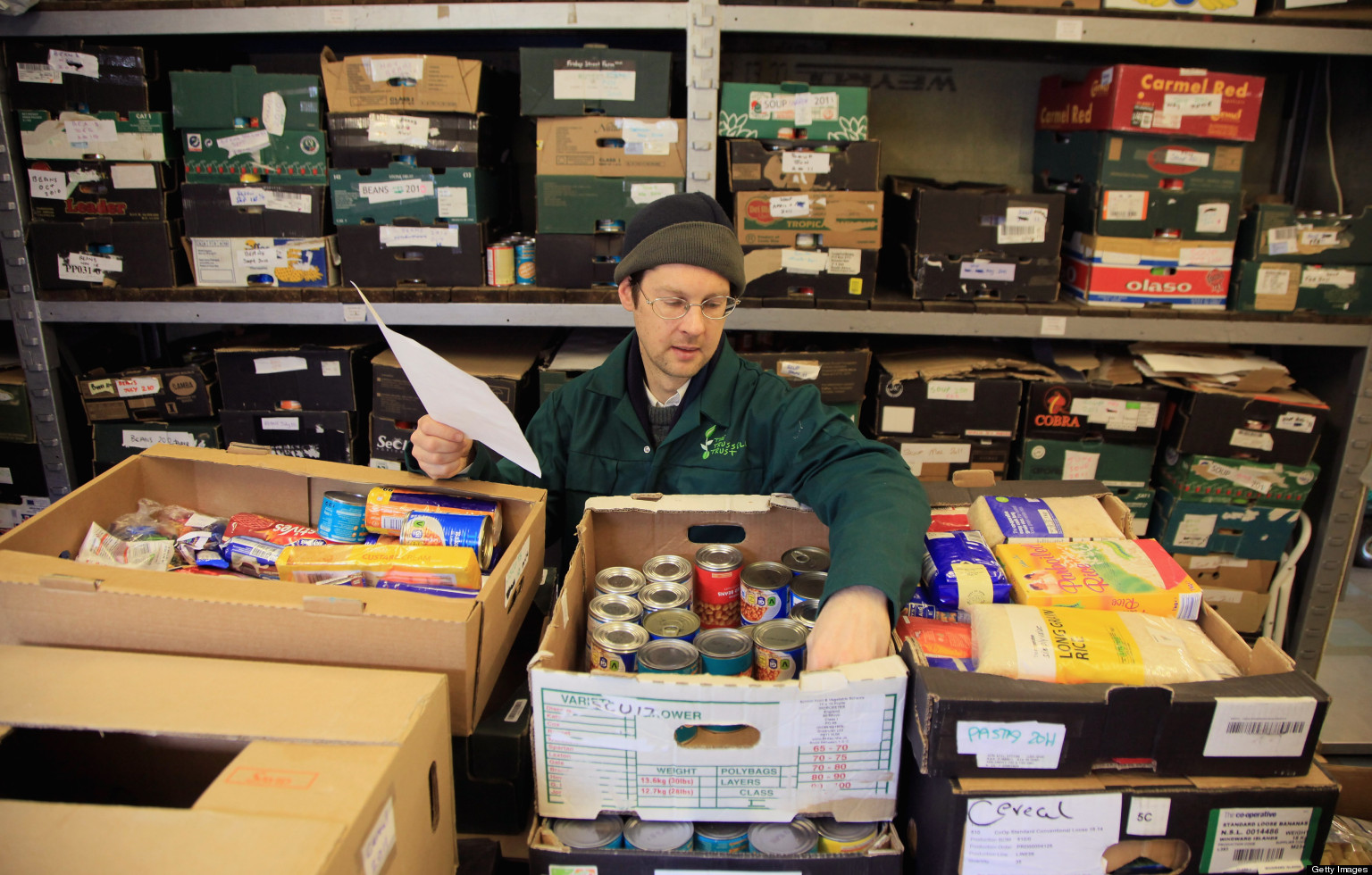
The Archbishop of Canterbury revealed this week how he was left more shocked by the plight of Britain’s hunger-striken poor than by suffering in African refugee camps, not because the suffering is worse, but because it was so unexpected. Britain is one of the world’s wealthiest countries in the world, yet 4.7 million people are facing food poverty. Here in Walsall there are at least five food banks, and according to The Trussell Trust three new food banks are opening every week across the country.


Redundancy, illness, low income, benefit delay, domestic violence, debt, family breakdown, financial pressures caused by rising food and fuel prices are just some of the many reasons why people are having to rely on food banks. People are going to food banks not out of choice, but out of need. Of the 913,138 people who were given emergency food and support between 2013-14, 333,205 were children. Tragically the need is only going to increase, as the financial challenges facing the country deepen.

At Christmas we recall how Jesus was born in poor and humble circumstances, and how Mary and Joseph were dependent upon the support that others gave them. We have a moral duty to support the hunger striken-poor.

There are a number of practical things you can do. You can donate food to one of the food banks here in Walsall – for details about your nearest food bank visit www.blackcountryfoodbank.org.uk or phone 01384 671250, or alternatively bring donations of food to the church for The Glebe Centre, which supports the homeless in Walsall. You can also support the work of The Big Feed, held at Midland Road Baptist Church in Walsall, which feeds up to 100 people every Sunday. They require donations of food, people to help cook meals at home (which are then frozen & collected during the week), or volunteering to go down to Midland Road Church to talk to the guests (contact Mandi on 01922 643946 for more information).

Despite the huge number of people facing food poverty, we can do something about it, and in serving others, we serve Christ.

“For I was hungry and you gave me something to eat, I was thirsty and you gave me something to drink, I was a stranger and you invited me in, I needed clothes and you clothed me, I was sick and you looked after me, I was in prison and you came to visit me… whatever you did for one of the least of these brothers and sisters of mine, you did for me.” Matthew 25:35-36, 40               


Tuesday, 16 December 2014

The Christmas Truce December 24 1914 & the coming of Jesus

During 2014, there have been a series of events to commemorate the centenary of the First World War.


One of the most moving and powerful memorials was the Blood Swept Lands and Sea of Red installation at the Tower of London, where 888,246 poppies filled the moat, representing every single British and Colonial military fatality during the war.


On the 12th December Prince William unveiled another memorial to the First World War, this time a permanent one at the National Memorial Arboretum, to commemorate one of the most extraordinary events of the First World War, an event which took place on Christmas Eve 1914.  The war had been raging for 5 months, and had already claimed 1 million lives, but on Christmas Eve 1914 something extraordinary happened. 


Soldiers wrote letters home, describing what happening during that Christmas truce. 
On the 31st December 1914, the Evening Mail in Newcastle printed this letter. 

'On Christmas Day one of the Germans came out of the trenches and held his hands up.  Our fellows immediately got out of theirs, and we met in the middle, and for the rest of the day we fraternised, exchanging food, cigarettes and souvenirs.  The Germans gave us some of their sausages, and we gave them some of our stuff.  The Scotsmen started the bagpipes and we had a rate old jollification, which included football in which the Germans took part.  The Germans expressed themselves as being tired of the war and wished it was over.  They greatly admired our equipment and wanted to exchange jack knives and other articles.  Next day we got an order that all communication and friendly intercourse with the enemy must cease but we did not fire all that day, and the Germans did not fire at us.’
Where the truce took place, it lasted on average two or three days, with some parts of the front seeing the truce extended to New Year’s Day.  There is even some evidence to suggest that a truce of sorts existed until March.

Not everyone experienced the truce.  It wasn’t universal, fighting continued along parts of the Western Front, but for those who did witness it, it must have been an extraordinary and unforgettable experience.  The Christmas truce was a breakthrough of peace.  For a short while there was a glimmer of hope that the fighting could end.

The birth of Jesus is also a story about how peace managed to breakthrough into the world. 
Jesus was of course no ordinary baby, he is Immanuel, God with Us.  The prophet Isaiah foretelling of the birth of Jesus said that “he will be called Wonderful Counsellor, Mighty God, Everlasting Father, Prince of Peace.” (Is. 9:6).  And when the angels announced the birth of Jesus to the shepherds they sang “peace on earth.” (Lk 2:14) 

The message of Christmas is that true peace can only be found in Jesus, the Prince of Peace.  The peace that Jesus brings is not just for a moment, not even for a day, it is for a lifetime. 

The baby born on that silent night, in Bethlehem so long ago, went on to model a life of love and forgiveness, through his actions and his teachings, and through his death and resurrection he reconciled us to God. 

Through Jesus we can experience:
  • Peace with God (spiritual) ‘"Now that we have been put right with God through faith, we have peace with God through our Lord Jesus Christ" ’ (Romans 5:1) 
  • The peace of God (emotional) "Don't worry about anything; instead, pray about everything. Tell God what you need, and thank him for all he has done. If you do this, you will experience God's peace, which is far more wonderful than the human mind can understand. His peace will guard your hearts and minds as you live in Christ Jesus" (Philippians 4:6-7 NLT).
  • Peace with each other (relational) "Blessed are the peacemakers: for they shall be called the children of God" (Matthew 5:9 KJV).

This peace Jesus offers us comes with the knowledge and understanding that
  • we’re loved unconditionally
  • we’re forgiven
  • that Jesus is with us, no matter what difficulties or challenges we may face in life
  • that our eternal future is secure, when we give our lives to Jesus

The peace brought by the 1914 Christmas truce did not last, but the peace that God sent to us in Jesus endures.

The same Jesus whose birth we celebrate at Christmas, and who walked on earth two thousand years ago wants to walk with us into every situation, bringing peace, love and hope for the future.

All we need to do to receive this peace, is to open our lives to Jesus, to say to Jesus, “I want you to be Lord of my life”.  In the Bible it says, "It makes no difference who you are or where you're from - if you want God and are ready to do as he says, the door is open"  (Acts 10:35 MSG)

‘Now may the Lord of peace himself give you his peace at all times and in every situation.’ (2 Thess 3:16) Amen.


Friday, 20 December 2013

Christmas Talk 2013

When Walt Disney promised his daughters that he would make a movie of their favourite book ‘Mary Poppins’  he had no idea it would take 20 years to fulfil this promise.  What he hadn’t bargained for was the book’s author PL Travers, who did not want to see her beloved creation ruined by Hollywood.  The relationship between Walt Disney and PL Travers, and how Mary Poppins was brought to the big screen is told in the film ‘Saving Mr Banks’, which is currently showing in cinemas.  At the end of Saving Mr Banks, it gives the impression PL Travers came to accept and even like the film of Mary Poppins, but in reality she hated what the movie had done to her beloved character.  She accused Walt Disney of betraying her originally dark protagonist by turning her into the bundle of joy that was Julie Andrews.  The film is certainly different to the book.  In the book Mary Poppins is a no-nonsense, dark and disciplined character, who uses more self-discipline than magic, but this was lost in the film version.
You could argue that something similar has happened to the Christmas story.  Much of the story has been sanitised, with the darker, far more troubling elements in the nativity often ignored or overlooked.  For example most nativity scenes, whether performed in schools or churches, finish with the wise men visiting the infant Jesus.  But rarely do we go onto tell what happens next.  The Apostle Matthew records that “When Herod realized that he had been outwitted by the Magi, he was furious, and he gave orders to kill all the boys in Bethlehem and its vicinity who were two years old and under, in accordance with the time he had learned from the Magi.” (Mt 2:16).  Because of this, Mary, Joseph are forced to flee to Egypt with Jesus, where according to the Gospel of Matthew they stay until Herod’s death, before returning to Nazareth, because it was not safe for them to return to Bethlehem. 
You may say that this would not be appropriate to show or talk about at Christmas, especially if children are present.  But Herod plays an important part of the story and if we leave him in the Christmas narrative, we can address the shadow of evil hovering of Christmas to this day, in places like Syria, where the innocent are suffering and dying on a daily basis, and where the international community seems unable to bring an end to the bloodshed.  Herod still stalks the earth. 
It was into this dark, troubled, and violent world that Jesus, the one who laid the foundations of the earth (Hebrews 1:10), the one through whom all things were made (John 1:3), became Emmanuel, God with us. 
Because of the incarnation, in our darkest hours, in our saddest moments, when fear and violence and loneliness seem to rule the planet, we can take comfort that we are not alone.  That God entered human flesh, and lived as one of us.  
Dietrich Bonhoeffer, the German theologian who was killed by the Nazi’s shortly before the end of the Second World War, wrote, “We are no longer alone; God is with us.  We are no longer homeless; a bit of the eternal home itself has moved into us.”
Jesus came as the Light of the World, and as we heard in our reading from John’s Gospel, ‘The light shines in the darkness, and the darkness has not overcome.’ (John 1:5).  Because of Jesus, we have hope.  We have hope for the future, that we will be redeemed; hope for the present, that we are not alone.  He gives us hope even for the past, hope that our failures are not greater than God’s love.  And even as the smallest light can dispel darkness, so the light of Christ comes to dispel the darkness in our lives, and the darkness in our world. 
None of us had any choice over how or when we were born.  But God did, and he chose a simple stable.  In doing so, he announced in a dramatic way that he had come to be available to us all, and that he came to stand on the side of the poor, the weak, the disposed, the homeless, and those on the margins of society. 
If we idealise and over sentimentalise the nativity the danger is that it removes the birth of Jesus from the realities, and struggles of ordinary life. 
Rather than the romanticised manager that we tend to think about at Christmas, the stable or cave where Jesus was born would have been smelly, dirty, cold and untidy, and the manager he was placed in simple and crude, a very strange bed for a King to lie in.  Probably someone may have gone as far as to place clean straw under the baby, but elsewhere the straw on the floor would have been anything but fresh. On the wooden posts, there would be signs of where generations of animals had rubbed their itching, flea-bitten backs.  In Christina Rossetti’s carol In The Bleak Midwinter, she writes Our God, Heaven cannot hold Him nor earth sustain; Heaven and earth shall flee away when He comes to reign: In the bleak mid-winter a stable-place sufficed The Lord God Almighty, Jesus Christ.
We sometimes think that in order for Christ to enter our lives, we need first to get our lives all sorted out, and cleaned out.  But what the message of Christmas shows, is that just as Jesus was once born in a cold, dark, dirty, unrenovated barn, in a place normally reserved for animals, so he wishes to be born today in cold, dark, dirty, unrenovated hearts.  He does not postpone His birth in us until we have swept out the moral refuse. He comes to us as we are – into our broken, and less than perfect lives, with all our impatience, selfishness, evil thoughts, pride, deceit, and pretence.  We do not need to first sanitise our lives for Jesus to come in.  We don’t need to go in search of God, he came in search of us to rescue us by entering fully into the world.  This is the message of Christmas. Emmanuel: God with us.
And the question we need to ask ourselves is, are we going to allow Christ into our lives and to renew and refresh them, no matter how messy, or messed up they may be. Jesus today says “Here I am! I stand at the door [of your lives] and knock. If anyone hears my voice and opens the door, I will come in and eat with that person, and they with me.” (Rev 3:20).  Are we willing to allow Christ into our less than perfect lives afresh this Christmas, & let his light and love radiate out for all to see, just as God’s love radiated out of that lowly manger where Jesus lay?  

Thursday, 12 December 2013

Beyond the Tea Towels & Tinsel: What is Christmas About?

The following information below was written by Anne Le Bass, a priest in the south east of England, who put together this information about Christmas to help people understand what's in the story, and what isn't.  I've made a few small alterations to the tex. To download the original handout click HERE.

BEYOND THE TEA-TOWELS AND THE TINSEL: WHAT IS CHRISTMAS ABOUT?


For Christians the birth of Jesus is more than just a comforting story to brighten up a dark time of year. Nor is it a story primarily for children (or even necessarily suitable for children if we take it seriously). It encapsulates important themes in Christian belief.

DID IT HAPPEN?

Jesus certainly existed. There is no credible reason why anyone should invent him. No one in the earliest days of the church would have risked their life to follow a fictional character, so the Church would never have got off the ground if he hadn’t been real. Many of those who wrote the books that we now call the New Testament, although they may not have known Jesus themselves, knew people who had done.

If Jesus existed, he must, therefore, have been born. His first followers, however, do not seem to have been very worried about the circumstances of his birth. It wasn’t important to them. It isn’t referred to in the Epistles, most of which were written before the Gospels, and very little, if anything, essential to Christian faith depends on the details of Jesus’ birth.

Only two of the Gospels record any birth stories (Matthew, who tells the story of the Magi and Luke, who tells the story of the shepherds). There are interesting differences between the two versions, though that doesn’t stop us squashing them together in Nativity plays. Matthew, for example, has the Holy Family escaping to Egypt after the Magi’s visit. Luke has them apparently going back to Nazareth via Jerusalem when he is six weeks old. In Matthew the news that Mary is pregnant is announced to Joseph in a dream – Mary is not consulted, and her views are not recorded. In Luke the angel comes to Mary, and she is a major player in the story.

WHAT’S IN THE STORIES, AND WHAT ISN’T?

Matthew
Starts with a genealogy which begins with Abraham, the father of the Jewish people. God had
made a covenant with him, that he would be the father of a multitude, God’s chosen people.
Matthew’s genealogy aims to show that Jesus is the true inheritor of that promise ; those who
follow him aren’t being traitors to their tradition. There are lots of reminders in the story of Old
Testament prophecies, (see, for example 1.23, 2.6, 2.15, 2.17, 2.23) These serve the same
purpose – Jesus isn’t an interloper, betraying the heritage of the Jewish people.

The genealogy includes 5 women. The first four could all in some way be regarded as unlikely
or even dodgy – outsiders in some way (Tamar, Rahab, Ruth, Bathsheba ). They are all,
however, vital links in the chain – God uses them to advance the story, to keep the line going.
The final woman is Mary, who, it is plain was also regarded as an unlikely mother for a
Messiah.

Matthew continues with the annunciation of Mary’s pregnancy to Joseph (Mary’s reaction
is not recorded). He decides to stand by her, though others may think that this reduces his
dignity. Like the four earlier women in the genealogy, God works through an unlikely channel.

Jesus is born in Bethlehem, but we’re not told that the family have travelled there – the
assumption is that they lived there all along. There is no stable or any suggestion that there was
“no room at the inn”. There is no mention of Nazareth until the end of the story, when Joseph
takes Mary and Jesus there on their return from Egypt, apparently because he feels it will be
safer than Bethlehem.

Herod and the Magi. The magi are only in Matthew. We’re not told how many of them there
are, and they are not kings. There are no camels…! Their significance is that they are outsiders
– Gentiles – and that they see the true identity of the Messiah when the Jewish rulers don’t. God
works through outsiders (like Ruth in the genealogy) if his own people don’t see him.

The flight into Egypt and the massacre of the children of Bethlehem. Jesus is seen as a
challenge to the power of Herod. He is a new king. Matthew’s story has been called the story of
two kings (Herod and Jesus) and some wise men.

The return from Egypt after the death of Herod to Nazareth – a new home for Joseph and
Mary, not a return to an old home.

Luke
The annunciation in the Temple of the birth of John the Baptist to Zechariah by an angel.
He and his wife Elizabeth are elderly and childless. Zechariah can’t believe it and is struck
dumb until John is born.

The annunciation of birth of Jesus to Mary by an angel (Joseph’s reactions are not
recorded). They are living in Nazareth, which is, apparently their home town.

Mary’s visit to Elizabeth. Elizabeth greets Mary as “the mother of my Lord”. Mary speaks
words (called the Magnificat in later Christian tradition) which praise God because he “has
brought down the powerful from their thrones and lifted up the lowly”).

The birth of John the Baptist and his naming. At which Zechariah speaks the words known
to later tradition as the Benedictus, announcing that this child will announce the time when the
people of Israel will “be saved from our enemies and from the hands of all that hate us” and “ by
the tender mercy of our God , the dawn from on high will break upon us, to give light to those
who sit in darkness and in the shadow of death, to guide our feet into the way of peace.”)

The birth of Jesus is set against a backdrop of political oppression in the rule of Caesar
Augustus. There is no record of a universal census at this time, but the point is that the people
of Israel are subject to the whims of rulers who can decree that they should all traipse about the
country for no very good reason.

The journey to Bethlehem. There is no donkey, nor any scenes of them going from inn to inn
and being turned away. There is no innkeeper (grumpy or otherwise).  The word translated as
"inn", is in fact a mistranslation, and more likely refers to an upper room in a family home.  It is
likely Joseph had relatives in Bethlehem, and they would have stayed with them, but because
the upper room was occupied, it meant the couple had to sleep downstairs in the open living
space where animals were kept at night for safety and where they ate from troughs dug into the
earth at one end of the room. Whilst nativity scenes depict a stable, it could have been a cave.  
There are no oxen, no cattle lowing (or doing anything else), no cats, dogs, birds, mice nor any
other animals. 

The annunciation to the shepherds. More angels. Opinions vary on the significance of the
shepherds. Some commentators say that they were regarded as the lowest of the low – living
out in the fields with the flocks meant they couldn’t keep the purity laws. Others suggest that
these shepherds may have been looking after the sheep used for sacrifice in the Temple in
Jerusalem (not far away) and so are a reference to Jesus’ self sacrifice (the Lamb of God who
is sacrificed, in the thought of the time, to end all sacrifice), or are a comment on the failure of
the Jewish religious leaders who should be “the shepherds of God’s flock”. There could also be
echoes of the story of Moses, who was looking after his father in law’s sheep when he
encountered God in the burning bush – once again unlikely people encounter God in an unlikely
way and begin a chain of events that will lead to a new liberation.

The circumcision and naming of Jesus. "Jesus” is a form of the name Joshua, which
means “God saves”. Joshua was the OT hero who succeeded Moses and led the Hebrews into
the Promised Land after the Exodus. Naming is important in this story – see the debate around
the naming of John, whose name means “God has given grace”.

The presentation of Jesus in the Temple at 40 days old. The sacrifice was a religious
requirement. Those who could afford it were to bring a lamb, but a pair of pigeons or
turtledoves was the permitted “budget” sacrifice for those who couldn’t. This tells us that Mary
and Joseph weren’t rich.

Simeon and Anna, devout elderly people who have been “looking for the redemption of Israel”
(i.e. the coming of the Messiah) acclaim Jesus, who no one else has noticed. They bring to an
end the series of moments of “recognition” or annunciation which we have seen in Luke’s
account.
  
For the sake of completeness…

MARK’S Gospel begins with the adult John the Baptist announcing the beginning of Jesus’ ministry. He makes no reference to Jesus’ birth, except in a curious aside, (6.3) when Jesus is referred to by a hostile crowd as “Mary’s son”. It wouldn’t have been normal to refer to someone as the son of their mother, rather than their father, unless they were illegitimate, or their parentage in some way dubious. Mark’s Gospel is almost certainly the earliest, and may, therefore preserve an early rumour that Jesus was conceived out of wedlock, which would have meant he was regarded with suspicion and disapproval.

JOHN’S Gospel begins with the famous passage, “In the beginning was the Word and the Word was with God, and the Word was God….and the Word was made flesh and lived among us.” It is a meditation on the significance of Jesus, who was God’s expression of himself, in John’s thinking, bringing light and life to the world. However “he came to what was his own, and his own people did not accept him.” John’s writing, late in the first century, is heavily tinged with Greek thinking. For him Jesus is, in some sense, a pre-existing divine figure; the other Gospels spell out far less clearly what they mean when they call him the “Son of God”.

THEOLOGICAL THEMES OF THE CHRISTMAS STORY FOR CHRISTIANS

Incarnation
For Christians the birth of Jesus speaks of God being present on earth in a way which we can see and touch, in human flesh (carnosus means fleshy ) subject to all the things that happen to human flesh – including suffering and death. Because we know that he has experienced what we experience we feel that he can understand and help us.

One of the titles given to Jesus in the birth stories is “Emmanuel” which means “God is with us.”

Incarnation is also significant for Christians because we see in it God putting aside his glory and coming among the least and the lowest (coming down to earth literally) “Let the same mind be in you that was in Christ Jesus, who, though he was in the form of God,  did not regard equality with God   as something to be exploited, but emptied himself, taking the form of a slave, being born in human likeness. And being found in human form, he humbled himself and became obedient to the point of death — even death on a cross. (Philippians 2.5-8)

The Kingdom of God
The Christmas story represents a new beginning, the coming (“advent”) of God’s Messiah to bring in a new kingdom. During the preparation for Christmas (Advent) we think about the ways in which we still need God to come to us. We think about issues of peace and justice, forgiveness and reconciliation. This is why Advent is a time of reflection and penitence – during it we become aware of our needs and the needs of the world. The Nativity stories have a strong element of challenge in them to the status quo of the world in which they happen – the Roman and Jewish rulers fail to see, or to stop, the birth of this “new king”.

The Word of God. Jesus is seen as God’s expression of himself. He had spoken through the prophets in the Old Testament, but now he speaks through a son, someone who in some way “embodies” his message. It’s not words, but the Word. Knowing God through a person is very different to knowing him in words – people are deep, subtle, responding in different ways to different circumstances, growing, learning and changing; they can’t be reduced to lists of rules and instructions. 

CELEBRATING ADVENT AND CHRISTMAS

ADVENT begins on the fourth Sunday before Christmas (not Dec 1). The colour of altar hangings, vestments etc. is purple (or blue in some traditions), and it is a penitential season, when the emphasis is on awareness of what needs to change in the world and in us.

During Advent we sing special Advent hymns, although inevitably Christmas hymns and celebrations creep into the Advent season!

Many churches use Advent candles – four candles for the four Sundays, plus a fifth lit at the first Communion service of Christmas. The Christmas candle is white, the others are either all red, or three purple and one pink (for the third Sunday in Advent- Gaudete, or “rejoicing” Sunday).

Other Advent traditions are the Advent candle, with 24 markings to burn through during December, Advent calendars and the Jesse tree, which uses symbols of Old Testament stories, told each day, to lead up to Christmas.

CHRISTMAS begins at the first celebration of Communion for Christmas. In many churches this happens on Christmas Eve, shortly before midnight (Midnight Mass). The altar hangings, vestments etc. are gold or white.

There is often a crib scene in the church (ours is put together at the Crib service on Christmas Eve afternoon).

The Christmas season in church lasts until CANDLEMAS, on Feb 2, the feast of the Presentation of Christ in the Temple. It includes the feast of EPIPHANY on Jan 6, when we remember the visit of the Wise Men, and the weeks after that (sometimes called Epiphanytide) which focus on stories of people becoming aware of Jesus (Epiphany means manifestation, or showing).

CHRISTINGLES are a Moravian tradition, quite recently used in this country, often in aid of the Children’s Society; a Christingle service can take place at anytime during the Advent or Christmas seasons.