Showing posts with label Bethlehem. Show all posts

Tuesday, 6 January 2015

Finding God In Unexpected Places

Have you ever encountered God in an unexpected place or person?  

Imagine if you walk past someone sitting on the street begging for money what would you see? 


This is Alan, he is 40 years old, and has been using drugs & alcohol since he was 12.  He’s homeless & sits in a sleeping bag waiting for handouts to feed a deep rooted drug habit. 

AIan is the subject of Marksteen Adamson’s ‘Behold The Man’ project.  Marksteen is a photographer who befriended Alan & spent time trying to discover the real Alan behind the endless cycle of destruction that grips him & won’t let him go.

Alan & Marksteen

It was not easy.  He had to get through the bad behaviour, the sense of hopelessness, the smell & the dirt, and to focus on the human spirit, the man himself.  But as he did this, Marksteen was able to discover the real Alan, his dreams & aspirations, his disappointments & regrets, as well as the confidence, the charisma, intellect, and humour.  As he did this he was able to begin to see Christ in Alan.   

Today is Epiphany Sunday we recall the visit of the wise men to the infant Jesus.

The question I’ve been pondering, how did the wise men know that Jesus was the one they were looking for?  When they entered the house in Bethlehem where Jesus was living with Mary & Joseph, how did they know that this was the one they were looking for? 
What do we know about the magi?

The magi were astronomers, who came from the East, probably Persia.

Magi were very well educated and influential people, who were employed as advisors and acted as envoys. 

Magi would have been interested in time keeping, calendars, tides, medicine, religion, alchemy and many other subjects. They would have been particularly interested in the study of the night sky, because it was thought that what was observed in the sky was reflected in the events upon the earth. Monitoring of events in the heavens, it was believed, gave insight into what was happening, or going to happen upon the earth.

Matthew tells us that they were led to Bethlehem by a star. 

Despite nativity scenes, the magi didn’t arrive on the night of Jesus’ birth, but weeks or months later.

They initially go to Jerusalem, and to King Herod, because that would have been the natural place to search for a new King.

When they arrive in Bethlehem, they found Jesus not in a stable, but living in a house. 
Matthew tells us that when they entered the house they bowed down & worshipped Jesus, giving him the gifts they had brought with them.


Something extraordinary here.  They had travelled hundreds of miles, over deserts, facing great hardship & danger, searching for the new King.  And what they find, is not a child in a palace, surrounded by courtiers & the trappings of wealth & power.  But a small child & his parents living in the simplest & most humble of circumstances.  And yet, they recognise that this is the child they’ve been looking for. 

They recognise the Messiah, the King of the Universe in the face of a small child. 
They recognised Jesus in the unlikeliest of situations, are we able to do the same?
If there is one message we can take away from the Bible, it is that we can find God in unexpected places & people.  

St Martin of Tours: Born c316  


One day Martin, a Roman soldier, rode into town & saw a thin, sick-looking man shivering in the cold by the side of the road. The man was very poor, for his clothing was old and full of holes. He had nothing warm to keep out the cold. Moved by the plight of the man, Martin stopped pulled his sword out of his belt and cut his cloak in half giving half to the poor man. That night as he was sleeping, Martin had a vision of Jesus in heaven, surrounded by angels and wearing half of Martin’s cloak. Jesus said to the angels, “See how Martin has covered me with his cloak.”

Mother Theresa: 


Mother Theresa when asked what motivated her to serve the poorest of the poor, answered "Each one of them is Jesus in disguise." 
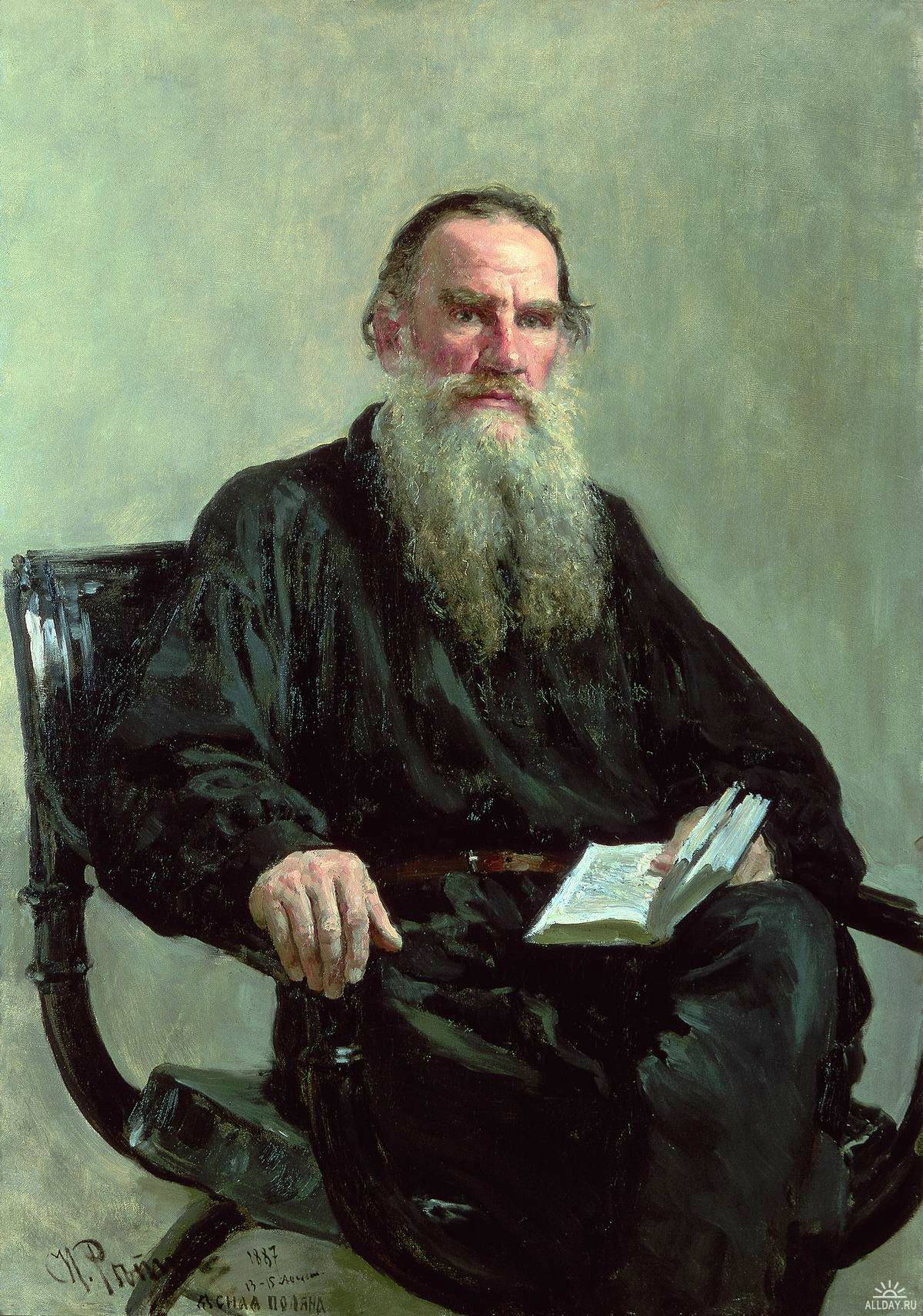

Tale by Leo Tolstoy  ‘Where Love Is, God Is’ 

Martin was a poor man, a cobbler, who lived alone & who felt he had nothing to live for, nothing to hope for.  One day, though, a traveller suggested to him that he should read the Bible. Perhaps in that there would be something which would help him. So Martin began to read the Gospels, of Jesus’ love for the poor, the sick, the lonely like himself. Gradually Martin’s heart softened & he said “if only I could meet this Jesus!”

The next day Martin tried to convince himself it was just a dream, but nonetheless, he couldn’t help peering out of his basement window hopefully. All he could see, though, was an old street sweeper, Stephanitch. Stephanitch was even poorer than Martin. On this winter’s day Martin could see that Stephanitch was freezing cold & weary. He called out to him to come inside. “Come and have some tea!” The street sweeper came in and gratefully drank several cups of hot tea, but he noticed that Martin kept looking out of the window. “Are you expecting someone, Martin?” Martin told him of his dream. “I know it is foolish, but perhaps it might happen as I dreamed.” Stephanitch shrugged – who can say what might happen in life if God wills it…? He went back out into the snow, thanking Martin for his kindness.


A little later Martin noticed a stranger standing outside his window. Was this Jesus? But no, it was just a young woman carrying a baby. Then Martin noticed, though, that her clothes were threadbare and she wore no cloak against the cold. The baby too, looked half-frozen. He went out and brought her in, gave her some soup and bread he had prepared for his own lunch, and listened to her story. Her soldier husband had died, leaving her penniless. She had no money, no food for herself and her child. As she rose up to go Martin gave her a little money, and an old cloak. He wished he could do more, but she was very grateful to him, and went on her way rejoicing.


“Who is it? “ Martin asked, peering round into the darkness.


“It is I” said the voice, and out of the corner of the room stepped the figure of Stephanitch, who smiled and vanished.


“It is I” said the voice again, and the woman with the baby came towards him and vanished.
And Martin looked down at the Bible in his hands. “As you did it for one of the least of my brothers and sisters you did it for me”. And Martin knew that Christ had indeed come to him that day, and that he, Martin had welcomed and cared for him just as he’d longed to.


Then one night in the depths of winter he had a dream. He dreamed that Christ spoke to him. “Tomorrow, Martin, I will come to visit you.”

Then later on Martin saw a hungry young boy who had been caught stealing from an apple old lady. He went outside and settled their argument as he extended love and compassion towards the both of them. But he still did not see Jesus.

Martin was pleased to have been able to help his friend, the young woman and the hungry boy, but he was still sad that Christ hadn’t come. He went back to his basement room as darkness fell, feeling a little foolish for having trusted in a dream. He opened his Bible to read again.

But as he read he heard a voice behind him. “Martin, Martin, don’t you know me?”
“It is I” said the voice a third time, and the apple seller and boy emerged from the shadows before vanishing.

The magi discovered God in an unexpected place, a small home in Bethlehem.
At the start of a New Year, let us ask God to open our eyes to His presence, in unexpected places & people.  To recognise that God is present in all aspects of our lives, and to make God visible in our lives to others.

May we never again find ourselves surprised to discover God in the unexpected
places of our lives. Amen.


Thursday, 12 December 2013

Beyond the Tea Towels & Tinsel: What is Christmas About?

The following information below was written by Anne Le Bass, a priest in the south east of England, who put together this information about Christmas to help people understand what's in the story, and what isn't.  I've made a few small alterations to the tex. To download the original handout click HERE.

BEYOND THE TEA-TOWELS AND THE TINSEL: WHAT IS CHRISTMAS ABOUT?


For Christians the birth of Jesus is more than just a comforting story to brighten up a dark time of year. Nor is it a story primarily for children (or even necessarily suitable for children if we take it seriously). It encapsulates important themes in Christian belief.

DID IT HAPPEN?

Jesus certainly existed. There is no credible reason why anyone should invent him. No one in the earliest days of the church would have risked their life to follow a fictional character, so the Church would never have got off the ground if he hadn’t been real. Many of those who wrote the books that we now call the New Testament, although they may not have known Jesus themselves, knew people who had done.

If Jesus existed, he must, therefore, have been born. His first followers, however, do not seem to have been very worried about the circumstances of his birth. It wasn’t important to them. It isn’t referred to in the Epistles, most of which were written before the Gospels, and very little, if anything, essential to Christian faith depends on the details of Jesus’ birth.

Only two of the Gospels record any birth stories (Matthew, who tells the story of the Magi and Luke, who tells the story of the shepherds). There are interesting differences between the two versions, though that doesn’t stop us squashing them together in Nativity plays. Matthew, for example, has the Holy Family escaping to Egypt after the Magi’s visit. Luke has them apparently going back to Nazareth via Jerusalem when he is six weeks old. In Matthew the news that Mary is pregnant is announced to Joseph in a dream – Mary is not consulted, and her views are not recorded. In Luke the angel comes to Mary, and she is a major player in the story.

WHAT’S IN THE STORIES, AND WHAT ISN’T?

Matthew
Starts with a genealogy which begins with Abraham, the father of the Jewish people. God had
made a covenant with him, that he would be the father of a multitude, God’s chosen people.
Matthew’s genealogy aims to show that Jesus is the true inheritor of that promise ; those who
follow him aren’t being traitors to their tradition. There are lots of reminders in the story of Old
Testament prophecies, (see, for example 1.23, 2.6, 2.15, 2.17, 2.23) These serve the same
purpose – Jesus isn’t an interloper, betraying the heritage of the Jewish people.

The genealogy includes 5 women. The first four could all in some way be regarded as unlikely
or even dodgy – outsiders in some way (Tamar, Rahab, Ruth, Bathsheba ). They are all,
however, vital links in the chain – God uses them to advance the story, to keep the line going.
The final woman is Mary, who, it is plain was also regarded as an unlikely mother for a
Messiah.

Matthew continues with the annunciation of Mary’s pregnancy to Joseph (Mary’s reaction
is not recorded). He decides to stand by her, though others may think that this reduces his
dignity. Like the four earlier women in the genealogy, God works through an unlikely channel.

Jesus is born in Bethlehem, but we’re not told that the family have travelled there – the
assumption is that they lived there all along. There is no stable or any suggestion that there was
“no room at the inn”. There is no mention of Nazareth until the end of the story, when Joseph
takes Mary and Jesus there on their return from Egypt, apparently because he feels it will be
safer than Bethlehem.

Herod and the Magi. The magi are only in Matthew. We’re not told how many of them there
are, and they are not kings. There are no camels…! Their significance is that they are outsiders
– Gentiles – and that they see the true identity of the Messiah when the Jewish rulers don’t. God
works through outsiders (like Ruth in the genealogy) if his own people don’t see him.

The flight into Egypt and the massacre of the children of Bethlehem. Jesus is seen as a
challenge to the power of Herod. He is a new king. Matthew’s story has been called the story of
two kings (Herod and Jesus) and some wise men.

The return from Egypt after the death of Herod to Nazareth – a new home for Joseph and
Mary, not a return to an old home.

Luke
The annunciation in the Temple of the birth of John the Baptist to Zechariah by an angel.
He and his wife Elizabeth are elderly and childless. Zechariah can’t believe it and is struck
dumb until John is born.

The annunciation of birth of Jesus to Mary by an angel (Joseph’s reactions are not
recorded). They are living in Nazareth, which is, apparently their home town.

Mary’s visit to Elizabeth. Elizabeth greets Mary as “the mother of my Lord”. Mary speaks
words (called the Magnificat in later Christian tradition) which praise God because he “has
brought down the powerful from their thrones and lifted up the lowly”).

The birth of John the Baptist and his naming. At which Zechariah speaks the words known
to later tradition as the Benedictus, announcing that this child will announce the time when the
people of Israel will “be saved from our enemies and from the hands of all that hate us” and “ by
the tender mercy of our God , the dawn from on high will break upon us, to give light to those
who sit in darkness and in the shadow of death, to guide our feet into the way of peace.”)

The birth of Jesus is set against a backdrop of political oppression in the rule of Caesar
Augustus. There is no record of a universal census at this time, but the point is that the people
of Israel are subject to the whims of rulers who can decree that they should all traipse about the
country for no very good reason.

The journey to Bethlehem. There is no donkey, nor any scenes of them going from inn to inn
and being turned away. There is no innkeeper (grumpy or otherwise).  The word translated as
"inn", is in fact a mistranslation, and more likely refers to an upper room in a family home.  It is
likely Joseph had relatives in Bethlehem, and they would have stayed with them, but because
the upper room was occupied, it meant the couple had to sleep downstairs in the open living
space where animals were kept at night for safety and where they ate from troughs dug into the
earth at one end of the room. Whilst nativity scenes depict a stable, it could have been a cave.  
There are no oxen, no cattle lowing (or doing anything else), no cats, dogs, birds, mice nor any
other animals. 

The annunciation to the shepherds. More angels. Opinions vary on the significance of the
shepherds. Some commentators say that they were regarded as the lowest of the low – living
out in the fields with the flocks meant they couldn’t keep the purity laws. Others suggest that
these shepherds may have been looking after the sheep used for sacrifice in the Temple in
Jerusalem (not far away) and so are a reference to Jesus’ self sacrifice (the Lamb of God who
is sacrificed, in the thought of the time, to end all sacrifice), or are a comment on the failure of
the Jewish religious leaders who should be “the shepherds of God’s flock”. There could also be
echoes of the story of Moses, who was looking after his father in law’s sheep when he
encountered God in the burning bush – once again unlikely people encounter God in an unlikely
way and begin a chain of events that will lead to a new liberation.

The circumcision and naming of Jesus. "Jesus” is a form of the name Joshua, which
means “God saves”. Joshua was the OT hero who succeeded Moses and led the Hebrews into
the Promised Land after the Exodus. Naming is important in this story – see the debate around
the naming of John, whose name means “God has given grace”.

The presentation of Jesus in the Temple at 40 days old. The sacrifice was a religious
requirement. Those who could afford it were to bring a lamb, but a pair of pigeons or
turtledoves was the permitted “budget” sacrifice for those who couldn’t. This tells us that Mary
and Joseph weren’t rich.

Simeon and Anna, devout elderly people who have been “looking for the redemption of Israel”
(i.e. the coming of the Messiah) acclaim Jesus, who no one else has noticed. They bring to an
end the series of moments of “recognition” or annunciation which we have seen in Luke’s
account.
  
For the sake of completeness…

MARK’S Gospel begins with the adult John the Baptist announcing the beginning of Jesus’ ministry. He makes no reference to Jesus’ birth, except in a curious aside, (6.3) when Jesus is referred to by a hostile crowd as “Mary’s son”. It wouldn’t have been normal to refer to someone as the son of their mother, rather than their father, unless they were illegitimate, or their parentage in some way dubious. Mark’s Gospel is almost certainly the earliest, and may, therefore preserve an early rumour that Jesus was conceived out of wedlock, which would have meant he was regarded with suspicion and disapproval.

JOHN’S Gospel begins with the famous passage, “In the beginning was the Word and the Word was with God, and the Word was God….and the Word was made flesh and lived among us.” It is a meditation on the significance of Jesus, who was God’s expression of himself, in John’s thinking, bringing light and life to the world. However “he came to what was his own, and his own people did not accept him.” John’s writing, late in the first century, is heavily tinged with Greek thinking. For him Jesus is, in some sense, a pre-existing divine figure; the other Gospels spell out far less clearly what they mean when they call him the “Son of God”.

THEOLOGICAL THEMES OF THE CHRISTMAS STORY FOR CHRISTIANS

Incarnation
For Christians the birth of Jesus speaks of God being present on earth in a way which we can see and touch, in human flesh (carnosus means fleshy ) subject to all the things that happen to human flesh – including suffering and death. Because we know that he has experienced what we experience we feel that he can understand and help us.

One of the titles given to Jesus in the birth stories is “Emmanuel” which means “God is with us.”

Incarnation is also significant for Christians because we see in it God putting aside his glory and coming among the least and the lowest (coming down to earth literally) “Let the same mind be in you that was in Christ Jesus, who, though he was in the form of God,  did not regard equality with God   as something to be exploited, but emptied himself, taking the form of a slave, being born in human likeness. And being found in human form, he humbled himself and became obedient to the point of death — even death on a cross. (Philippians 2.5-8)

The Kingdom of God
The Christmas story represents a new beginning, the coming (“advent”) of God’s Messiah to bring in a new kingdom. During the preparation for Christmas (Advent) we think about the ways in which we still need God to come to us. We think about issues of peace and justice, forgiveness and reconciliation. This is why Advent is a time of reflection and penitence – during it we become aware of our needs and the needs of the world. The Nativity stories have a strong element of challenge in them to the status quo of the world in which they happen – the Roman and Jewish rulers fail to see, or to stop, the birth of this “new king”.

The Word of God. Jesus is seen as God’s expression of himself. He had spoken through the prophets in the Old Testament, but now he speaks through a son, someone who in some way “embodies” his message. It’s not words, but the Word. Knowing God through a person is very different to knowing him in words – people are deep, subtle, responding in different ways to different circumstances, growing, learning and changing; they can’t be reduced to lists of rules and instructions. 

CELEBRATING ADVENT AND CHRISTMAS

ADVENT begins on the fourth Sunday before Christmas (not Dec 1). The colour of altar hangings, vestments etc. is purple (or blue in some traditions), and it is a penitential season, when the emphasis is on awareness of what needs to change in the world and in us.

During Advent we sing special Advent hymns, although inevitably Christmas hymns and celebrations creep into the Advent season!

Many churches use Advent candles – four candles for the four Sundays, plus a fifth lit at the first Communion service of Christmas. The Christmas candle is white, the others are either all red, or three purple and one pink (for the third Sunday in Advent- Gaudete, or “rejoicing” Sunday).

Other Advent traditions are the Advent candle, with 24 markings to burn through during December, Advent calendars and the Jesse tree, which uses symbols of Old Testament stories, told each day, to lead up to Christmas.

CHRISTMAS begins at the first celebration of Communion for Christmas. In many churches this happens on Christmas Eve, shortly before midnight (Midnight Mass). The altar hangings, vestments etc. are gold or white.

There is often a crib scene in the church (ours is put together at the Crib service on Christmas Eve afternoon).

The Christmas season in church lasts until CANDLEMAS, on Feb 2, the feast of the Presentation of Christ in the Temple. It includes the feast of EPIPHANY on Jan 6, when we remember the visit of the Wise Men, and the weeks after that (sometimes called Epiphanytide) which focus on stories of people becoming aware of Jesus (Epiphany means manifestation, or showing).

CHRISTINGLES are a Moravian tradition, quite recently used in this country, often in aid of the Children’s Society; a Christingle service can take place at anytime during the Advent or Christmas seasons.

Tuesday, 22 January 2013

The Time For Waiting Is Over


Sermon preached by Penny Wheble at St Martin's on Christmas Eve 2012

The time for waiting is finally over!

Angels sing of great joy for all people and shepherds race to the small town of Bethlehem to a barn behind the village inn.   Inside they discover a newborn child of peasant parents lying in an animal’s feeding trough.  As unlikely as it would appear to the ordinary person, these shepherds who are working the midnight shift see a wonderful miracle of God.  They return to their sheep celebrating and praising God with great enthusiasm for what they had seen.
  • This was not big news in Jerusalem that night.
  • The great Roman Empire missed it.
Yet this is the event that evokes cries of joy and celebration from the lips of kings and prophets of Israel throughout the ages.

You have multiplied the nation, you have increased its joy, they rejoice before you...   For a child has been born for us, a son given to us...  Isaiah 9:3&6

O sing to the Lord a new song, sing to the Lord all the earth...   Psalm 96:1

The writer of the New Testament letter Titus reflects back on the event and points to the reason for the joy and celebration.  For the grace of God has appeared, bringing salvation to all...
And today, 2000 or so years later, we too come to celebrate the birth of a peasant child who was born in a stable.

And who was this child who was born to parents so poor and so without influence or connections that they could not manage a simple room for a mother in labour?

The prophet Isaiah tells us who the child is, but can we believe it? 

Listen:
"For a child has been born for us, a son given to us;
authority rests upon his shoulders and he is named,
Mighty Counsellor, Mighty God, Everlasting Father,
Prince of Peace."  (Isaiah 6)


Surely there is some mistake here!

How can One so great even visit such a place as a barn in a second class town in a third rate nation -- much less be born there.  And placed in a manger -- a feeding place for lowly animals?
Surely a mistake has been made!

Where are the heralding trumpets?  The dancing maids and cheering throngs?   Why has the whole nation of Israel not turned out for the celebration?  Why do angels and choirs from heaven to lowly shepherds -- common labourers -- make an earth shattering announcement and sing anthems from the gates of heaven?

What in the world is God thinking?

If you were in charge, would not a Mighty Counsellor have at least a suite in a four star hotel?
I know that I would find the best room in town for the coming of a child a prophet had called "Mighty God and Prince of Peace." Even if there was a chance that prophet was wrong -- would we not err on the side of gaining the favour of such an important child and his parents?
One thing I am absolutely sure of.  If a real, honest to goodness Prince of Peace came to our Walsall today, I am sure there would be an incredible gathering of the most important people in town. And if that Prince of Peace for any reason did not have a place to spend the night -- is there anybody here who doubts that the finest suite in the area would be cleared out without delay?

And do you think for one little moment that the "movers and shakers" in Walsall would make haste to announce the coming of this Prince to the third shift workers over in the factories?
I wonder. Would they send someone to tell you about the coming of this Prince? Would I be included?

What in the world was God thinking?

We gather to celebrate a story that touches our hearts at the core.

Mary and Joseph make the long journey by donkey from Nazareth to Bethlehem. Mary is going to have a baby and the mean old innkeeper won’t give them a room. Jesus is born in the barn behind the inn and placed in a manger. His entourage and adoring guests are shepherds and animals.

It’s a story we love. And yet… would you want these circumstances for your daughter and grandchild? And if you think about all of this for very long, the question will seem so very natural.

What in the world was God thinking?

There is a clue in Luke where the shepherds are out in the fields going about their shepherding in the night when an angel from God showed up and the blazing white light of the glory of God lit up the landscape. Luke tells us the shepherds, "…were terrified…" The old King James version has the familiar, "and they were sore afraid."

The words used to describe the shepherd’s experience are from the Greek words "mega" and "phobos". What the shepherds felt was "mega fear!"  Fear that rates as "big time fear!"
Here’s the clue into what God is thinking by sending the Prince of Peace to the place and through the people in our scripture. When the shepherd’s were quaking in their boots and covering their eyes from the brightness of God’s glory, the angel says, "Do not be afraid; for see – I am bringing you good news of great joy for all the people."

The Lord God wants you and me to know that Jesus has come to bring us good news of God’s love and grace. He brings salvation, not condemnation – renewal, not retribution. Jesus is the Prince of Peace, not of punishment. God wants us to rejoice in, not hide from, the glory of heaven.

And just how does God approach us with this amazing and life changing news?

The One Isaiah calls, "Mighty Counsellor, Mighty God, Everlasting Father, Prince of Peace," becomes absolutely, totally, 100% vulnerable!

Can you get your head around this amazing truth? The heart of the celebration we share at Christmas tonight is the truth that the God who came to us in the birth of Jesus is…

The God who is vulnerable!

The whole Christian message begins with…
·         Parents who are poor.
·         A mother in labour with no place to go.
·         A newborn child with no crib for a bed.
·         Visitors who come to see the child who have no influence.

So you see, there is no reason for fear. There is no barrier to overcome. No person is too poor, or too uneducated, or too insignificant to come to the Christ child who is sent by the God who is vulnerable.

Such a wonderful truth can only be contained in an open, receiving, adoring heart.

I’d like to end with words by John Harvey
On this night of the year, a voice is speaking – can we hear it?
‘I know the cares and the anxious thoughts of your hearts.
I know the hard times you often give yourselves.
I know the hopes and ambitions that you have for yourselves and for others.
I know your doubts, too – even while you seek to express your belief.
On this night, I want to find a way of saying to you:
You are deeply, deeply loved,
Just as you are,
Forgiven, loved and challenged to be
The very best you can be.
So I’m speaking to you in the only way I know how –
From a stable,
In a child born into poverty,
Soon to grow to maturity,
Born to show you,
In a human life,
The love of God.’

O come – let us adore him!

Wednesday, 22 December 2010

And his shelter was a stable


Every Christmas, in schools, and playgroups throughout the country, the inn keeper in the story of the nativity plays an important role.

In one nativity play there was a boy who was very disappointed about not being chosen to play Joseph in the school nativity play. Instead he was given the role of the innkeeper instead, and over the weeks leading up to the play plotted his revenge. The day of the performance came. Mary and Joseph came to the inn and knocked on the door. The innkeeper opened the door a crack and looked at them coldly. "Can you give us a room for the night?" asked Jospeh. Then the innkeeper flung the door wide, beamed at them and said, "Come in, come in! You can have the best room in the hotel!" There was a pause. But Joseph was a quick thinker. He looked over the innkeeper's shoulder, then turned to Mary and said, "We're not staying in a dump like that. Come on, Mary, we'll sleep in the stable!"

The image of the manger and inn has firmly established itself in our imaginations, in nativity plays, and on Christmas cards, we have this picture of innkeepers and cattle gently lowing. But there is very strong likelihood that it never happened like that at all.

Here is what Luke says,

Joseph also went from the town of Nazareth in Galilee to Judea, to the city of David called Bethlehem, because he was descended from the house and family of David. He went to be registered with Mary to whom he was engaged and who was expecting a child. While they were there, the time came for her to deliver her child. And she gave birth to her firstborn son and wrapped him in bands of cloth, and laid him in a manger, because there was no place for them in the inn.' (Luke 2:4-7)


But the truth is that Luke may not have meant 'inn' at all. The Greek word he uses is Kataluma which has been translated as 'inn', is more accurately translated as guest room, or spare room, or anywhere you might put visitors. 

Luke uses the word kataluma twice in his gospel: once in this passage and once to describe the room in which the Last Supper took place; the 'upper room'. In Luke 22:11 two disciples are told to go and ask, 'Where is the guest room, where I may eat the Passover with my disciples?' No theologian, suggests that the last supper took place in an inn. In fact, the whole tone of Jesus' preparations for the Last Supper indicate a concern to find a private space, a space away from threats and interruptions and away from the vast crowds in Jerusalem for the Passover. 


When Luke does come to talk about an inn, he uses an entirely different word. In the story of the Good Samaritan, the victim of the thief's is taken to an inn, and here Luke uses a different Greek word pandocheion.


This indicates that either Luke is being inconsistent in his choice or words, or he didn't mean an inn at all. Luke is however someone he likes to get the details right. So Luke says, not that the inn was full, but that there was no room in the guest room, or spare room. 

This actually makes more sense of the story, because for Joseph to return to Bethlehem for a census indicates that he had strong links there – and probably had relatives living in Bethlehem. It would therefore make sense that he and Mary would have stayed with them. 

And just because Joseph travelled for the census doesn't mean that a lot of other people did. There may have been compelling reasons for him to escape Nazareth for a while, to escape the rumours that must have circulated regarding Mary's pregnancy. Certainly Luke gives no indication that Bethlehem was full. 

This means that sadly for schools and playgroups everywhere, the story of the hardhearted innkeeper who grudgingly opens the stable round the back may well be a misreading of the story. 

On top of this, there may not have even been a stable as well! Luke records that Jesus was placed in a manager, and animals feeding trough, but this would not have necessarily been in a stable.

We have to remember that Mary and Joseph were poor. When Mary receives news that she is going to give birth to the Messiah, she sings a song full of delight that the poor and hungry have been blessed by God. "He (God) has brought down the powerful from their thrones," she sings, "and lifted up the lowly, he has filled the hungry with good things, and sent the rich empty away." (Luke 1:52-53)

This song makes no sense at all unless Mary – and the man she was to marry – were 'lowly', poor, and even hungry. The language is full of the idea that God has chosen to bless the oppressed, rather than the oppressors. Mary herself was clearly lowly, she was probably only about 16 years old at the time she gave birth to Jesus, because most Jewish girls would have got married around this age. And Mary and Joseph were clearly poor, we know this because Luke records that when they went to the Temple to offer a sacrifice following the birth of Jesus, they sacrificed a 'pair or turtledoves or two young pigeons.' – which was the sacrifice you gave if you could not afford to sacrifice a sheep. 

Given this information, we can assume that Joseph came from a simple, poor background, and simple homes did not have stables!

The homes of ordinary poor families of the time were frequently built on two levels: there was the lower level where everyday living took place, and an upper level where the family slept. Or if they lived in caves, as many people did, the family would have slept in the central part of the cave, with the animals kept at the entrance, where they would have acted as a kind of primitive central heating!

So what Luke may be saying is that there was no spare room in the residential part of the house. The place was packed out. So they had to go to the lower level, where the animals were kept. This would explain why a stable is never mentioned. There wasn't one, the animals were kept downstairs in the home; what happened was that Jesus was put downstairs with the animals, because the rest of the house was full. 

What difference does this make, apart from ruining many a nativity play? Well for one thing it shows the truth of the incarnation, of Jesus becoming man. It brings alive the fact that Jesus was born in a very specific place at a very specific time. And that place was a cramped peasant's home in the tiny town of Bethlehem.

We can see that Jesus was born into a lower class family. It blows apart the cosy Christmas card picture of a nice warm, clean stable, with golden straw illuminated by the flowing halo round Jesus' head. In many ways it's a much more 'ordinary' scene. Although in Jesus' birth was highly unusual: very few births are announced by angelic choirs, in other ways it was almost painfully normal. The home was an ordinary peasant dwelling; the first cot an animals feeding trough. In some ways, as well, the birth is more shocking. The Son of God is laid, not in some kind of rustic cot, but in the place where usually the animals ate. He slept in hay full of ticks and fleas, in a home that was small and cramped. His parents were poor, his mother was only a young teenager.


The Renaissance paintings which inform our view of the event were painted for rich, wealthy patrons. They did not want to see conditions of slum like poverty, even had the artist managed to interpret the text correctly. So we have become conditioned to see a roomy stable full of colourful characters. We have sanitised the unsanitary stable. We have swept it clean from the dirty straw, given the animals a wash and brush up, spared a bit of myrrh around to cover the unsavoury smell of sweat and animal dung.

To do so is to miss the point. The point behind Luke's depiction of the birth of Jesus is that it WAS dirty and smelly and poor and cramped and hard and utterly, utterly, wonderful.

And this is surely the more wonderful deeper truth. The mystery of Christmas is that God sank himself into our flesh. That the one who is beyond all space and time, who is uncreated and eternal, became one of us. Majesty in the midst of the mundane, holiness in the filth of sheep manure and sweat. Divinity entering the world born on a dirty floor, through the womb of a teenager and in the presence of a carpenter. And the message of Christmas is that God in Jesus still comes to us, to our complicated, messy, broken lives, and by the power of his love can change and transform in ways we can hardly imagine.